

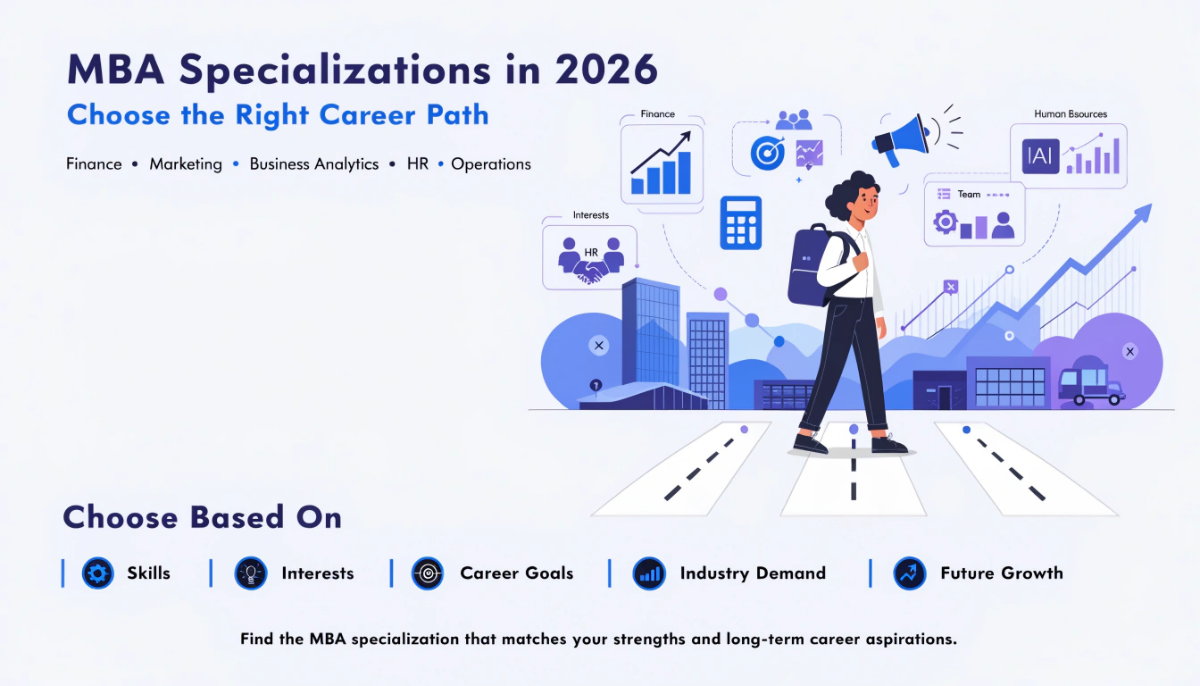
If you are planning to do an MBA and are stuck at the question of which specialization to pick, you are not alone. MBA specializations are the part of the program that really decides what kind of roles you go after, which industries hire you and what your salary trajectory looks like. A general MBA gives you breadth but it is the specialization that gives you depth and employers today are looking for both. This blog covers the most in-demand MBA specializations in 2026, what each one actually involves, who it suits, the kind of jobs it leads to and how to figure out which track is right for you. No fluff, just a clear breakdown so you can make a confident decision.
What MBA Specializations Actually Mean and Why They Matter
Before jumping into the list, it helps to understand what MBA specializations are and why they carry so much weight in your career. Here is the straightforward picture:
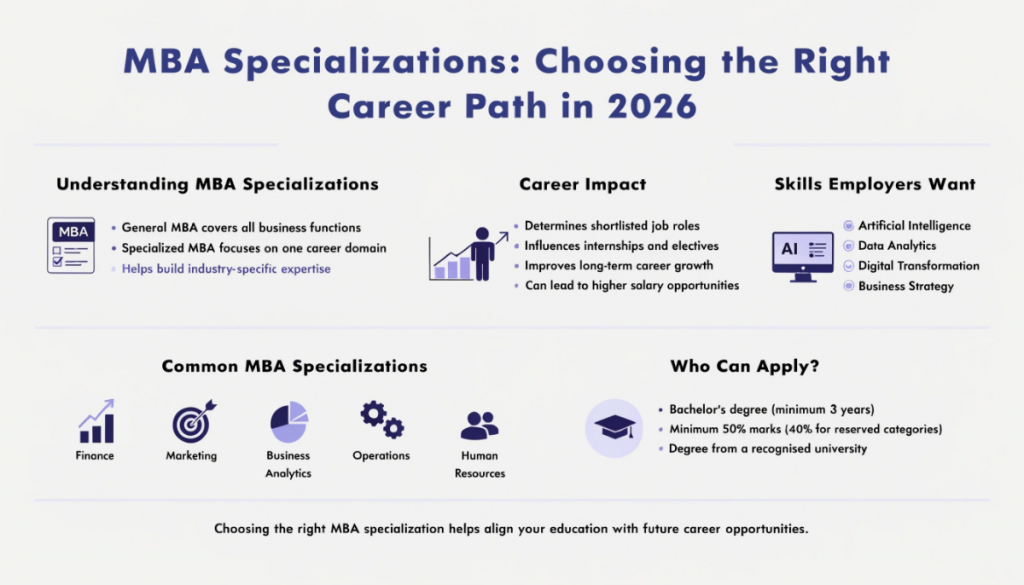
An MBA can be pursued as a general degree covering all business disciplines or as a specialized degree where the second year focuses deeply on one functional area
MBA specializations are elective tracks that let you build expert-level knowledge in fields like finance, marketing, analytics, operations or human resources
Choosing the right specialization from the MBA specializations list directly shapes which job roles you are shortlisted for, since recruiters hire based on the specialization track, not just the MBA degree itself
A finance specialization puts you in line for investment banking, wealth management and CFO-track roles while a marketing specialization targets brand management, digital marketing and CMO-track positions
The difference in starting salary between a general MBA and a specialized MBA can be significant, especially in high-demand tracks like business analytics, finance and supply chain
MBA specializations also influence which elective courses you take, which internships you pursue and which companies come to recruit at your campus
In 2026, with companies integrating AI, digital transformation and data-led decision-making into core operations, the right MBA specialization has become more important than ever for long-term career positioning
The eligibility requirement to pursue an MBA with any specialization is a bachelor’s degree of minimum three years duration with at least 50% marks, with 40% for reserved category candidates, from a recognised university
MBA in Finance: The Most Established Path in MBA Specializations
Finance remains one of the most chosen tracks in the MBA specializations list, and the demand for finance professionals has only grown with the rise of fintech and digital banking. Here is what you need to know:
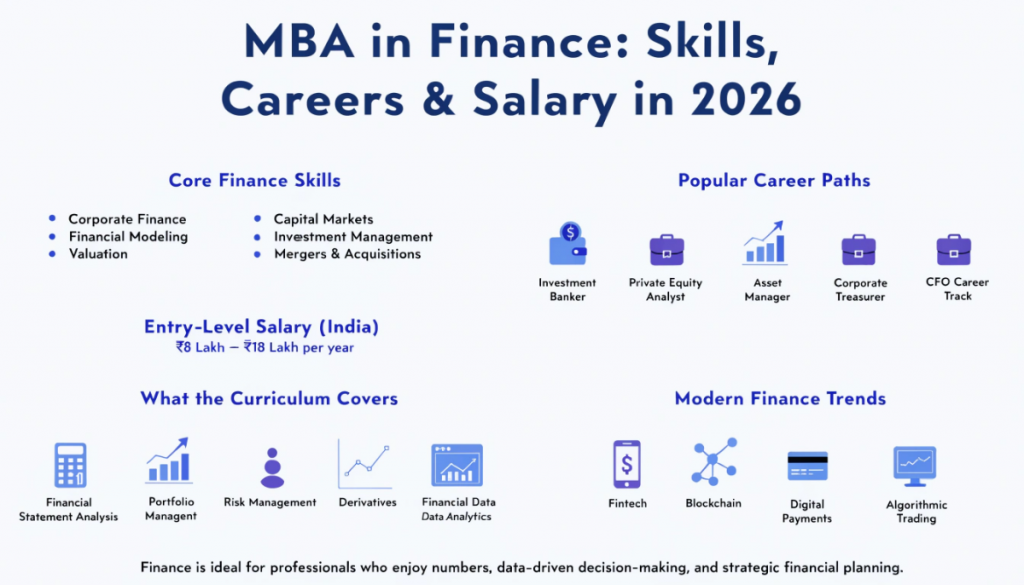
An MBA in Finance builds expertise in corporate finance, financial modeling, valuation, mergers and acquisitions, capital markets and investment management
It is the go-to specialization for anyone targeting investment banking, private equity, asset management, corporate treasury or CFO-track roles
The course covers subjects like financial statement analysis, derivatives, portfolio management, risk management and financial data analytics
Fintech has added a new dimension to this specialization, with many finance programs now including modules on blockchain, digital payments and algorithmic trading
Starting salaries for MBA Finance graduates in India typically range from 8 to 18 LPA at entry level, with senior finance roles often going well beyond that
Finance is one of the MBA specializations where the ranking of the institution matters a great deal for placement, particularly for investment banking and private equity roles
Students who enjoy working with numbers, financial data and quantitative decision-making tend to find finance the most natural fit among all MBA specializations
MBA in Marketing and Digital Marketing: Still One of the Most Versatile MBA Specializations
Marketing is consistently one of the most popular MBA specializations and in 2026 it has evolved well beyond traditional brand management into a full-fledged data and digital-driven discipline. Here is how it looks:
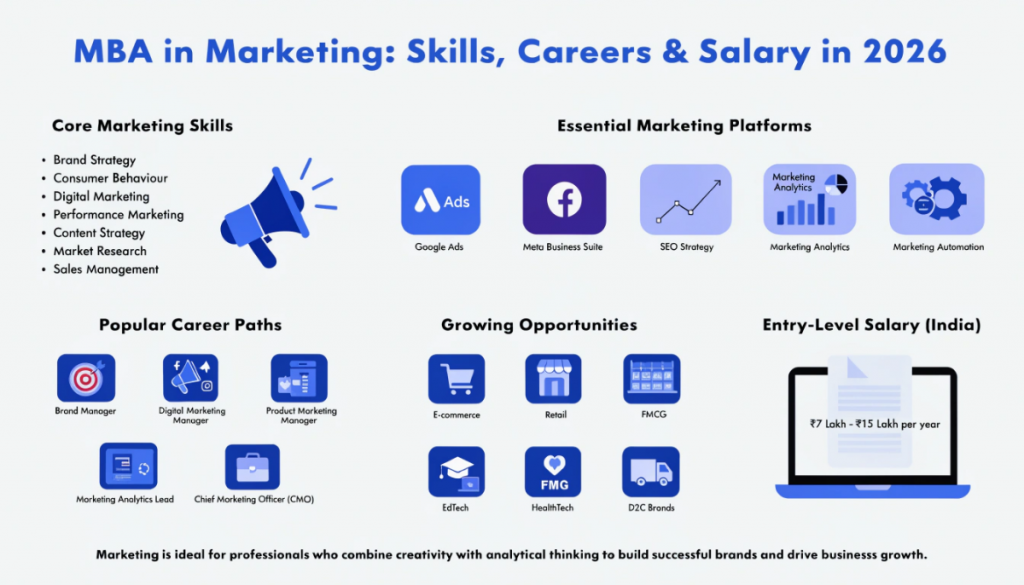
An MBA in Marketing covers brand strategy, consumer behaviour, digital marketing, performance marketing, content strategy, market research and sales management
Digital marketing tools including Google Ads, Meta Business Suite, SEO strategy, analytics platforms and marketing automation are now core parts of most marketing MBA specializations
Career paths include brand manager, digital marketing manager, product marketing manager, chief marketing officer and marketing analytics lead
Marketing is one of the MBA specializations that accepts students from all academic backgrounds, including arts, commerce and engineering, since creativity and analytical thinking are valued equally
The rise of e-commerce and direct-to-consumer brands has created strong demand for MBA Marketing graduates in retail, FMCG, edtech, healthtech and D2C startups
Salaries for MBA Marketing graduates in India range from 7 to 15 LPA at entry level and scale significantly for those who move into digital and growth marketing roles at high-growth companies
If you are someone who enjoys understanding why people buy what they buy and how to build a brand people trust, marketing is one of the most fulfilling MBA specializations to choose
MBA in Business Analytics: The Fastest-Growing Track Among MBA Specializations
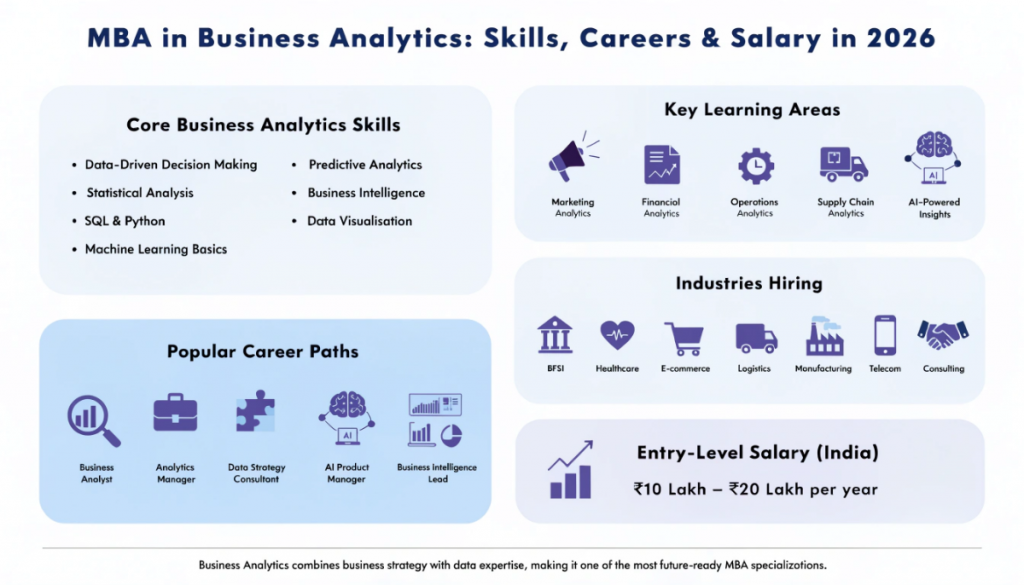
Business Analytics has gone from a niche offering to the most talked-about specialization in the MBA specializations list in just a few years. Here is why it has taken off:
An MBA in Business Analytics trains you to collect, interpret and apply data to make strategic business decisions across marketing, finance, operations and supply chain
The curriculum covers statistical tools, machine learning basics, SQL, Python, data visualisation platforms, predictive analytics and business intelligence systems
This specialization sits at the intersection of business and technology, making it attractive to both tech professionals looking to move into management and business students who want to build data skills
Industries actively hiring MBA Business Analytics graduates include BFSI, healthcare, e-commerce, logistics, manufacturing, telecom and consulting
Job roles include business analyst, data strategy consultant, analytics manager, AI product manager and business intelligence lead
Business analytics is one of the MBA specializations with the highest salary potential at entry level, with packages ranging from 10 to 20 LPA depending on the company and the candidate’s technical depth
If you are comfortable working with data and want a business role rather than a pure tech role, business analytics is widely considered the most future-proof of all current MBA specializations
MBA in Human Resource Management: The People Side of MBA Specializations
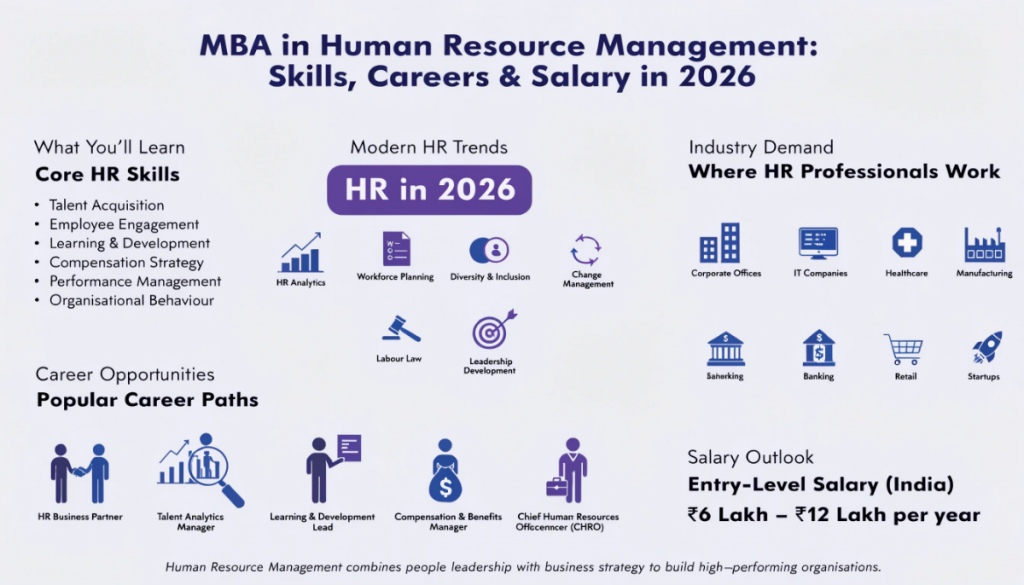
Human resource management has changed dramatically over the last few years and is no longer just about hiring and payroll. Here is what an MBA in HR actually covers in 2026:
An MBA in Human Resource Management covers talent acquisition, employee engagement, learning and development, compensation strategy, performance management and organisational behaviour
HR analytics has become a major component of this specialization, with HR professionals now expected to use data to make workforce planning decisions
Leadership development, diversity and inclusion strategy, labour law and change management are other core areas within this specialization
Career options include HR business partner, talent analytics manager, learning and development lead, compensation and benefits manager and chief human resources officer
MBA HR graduates are hired across all industries since every company with a workforce needs HR leadership, making this one of the most sector-agnostic MBA specializations on the list
Starting salaries for MBA HR graduates in India range from 6 to 12 LPA, with significant growth potential for those who move into HRBP and analytics-focused roles at large organisations
This specialization suits candidates who are strong communicators, enjoy working with people and are interested in building organisational culture and leadership pipelines
MBA in Operations and Supply Chain: The Underrated Choice Among MBA Specializations
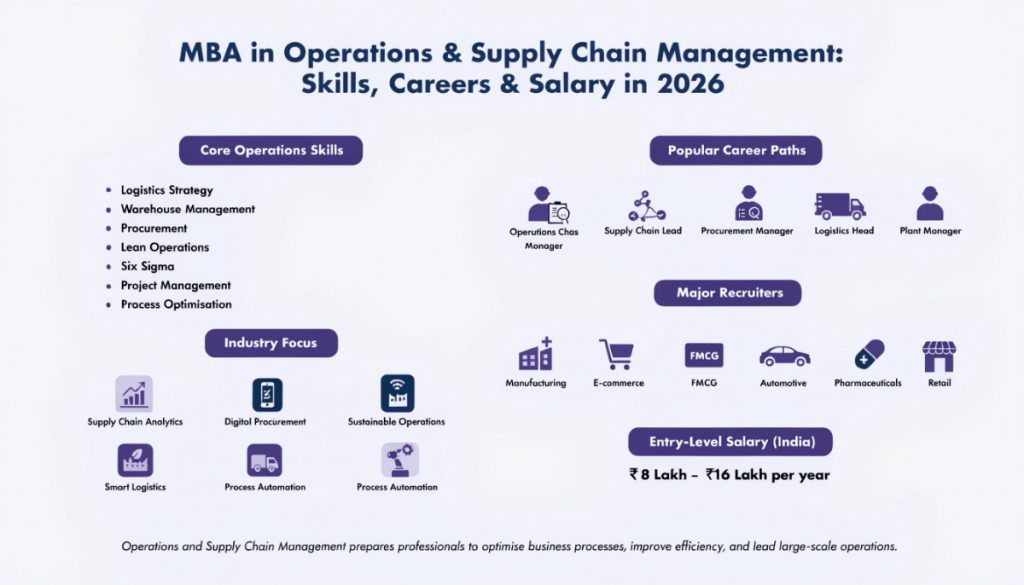
Operations and supply chain management is one of the MBA specializations that consistently offers strong placements but does not always get the attention it deserves. Here is the case for it:
An MBA in Operations and Supply Chain Management covers logistics strategy, warehouse management, procurement, lean operations, Six Sigma, project management and process optimisation
The global disruption of supply chains over the last few years has pushed this specialization to the top of the priority list for companies in manufacturing, retail, e-commerce and pharma
Career roles include operations manager, supply chain lead, procurement manager, logistics head and plant manager in manufacturing and industrial firms
E-commerce companies, FMCG giants, automotive firms and pharma manufacturers are among the biggest recruiters for this specialization
This is one of the MBA specializations where prior work experience in manufacturing, engineering or logistics gives you a strong edge during placements
Starting salaries range from 8 to 16 LPA and the growth trajectory is strong since operations roles often lead directly to general management and COO-level positions over time
The specialization covers cutting-edge areas like supply chain analytics, digital procurement and sustainable operations, making it relevant both for traditional industries and new-age logistics companies
Conclusion
MBA specializations are the part of the degree that actually define your career direction. Finance, Marketing, Business Analytics, HR, Operations and Supply Chain are the most established tracks and each offers strong placement potential when matched with the right candidate profile. Emerging specializations like Real Estate, Entrepreneurship, Healthcare Management and Retail Management are also building real career pipelines and are worth considering if your interests align.
The best MBA specialization is not the one with the highest average package on a ranking list but the one that connects your strengths and interests with industries that are actually growing. Take the time to research properly, talk to people already working in those roles and make a decision that is grounded in where you genuinely want to be, not just what looks impressive on paper.

Book Your
Free Session
Connect with our experts and get personalised guidance for your career, course selection, and future goals.
📖 Sources & References
✓ Verified 2026Verified MBA specializations, curriculum structure, career pathways, management skills and industry demand references based on recognised educational, regulatory and industry sources.
- UGC India MBA programme regulations, postgraduate education standards and higher education guidelines
- Ministry of Education National education policies, postgraduate programme frameworks and academic reforms
- AICTE Management education quality standards, industry integration and employability initiatives
- NASSCOM Technology hiring trends, digital business skills and future workforce reports
- World Economic Forum Future of Jobs reports, leadership skills and emerging business competencies
- Harvard Business Review Leadership, strategy, organisational management and business innovation insights
- National Career Service Management career pathways, industry demand and professional growth resources
- LinkedIn Workforce Insights Skills demand, hiring trends and career opportunities across business domains
- Shoolini Online MBA specializations, programme curriculum, admission guidance and career resources
- Distance Education Bureau Recognition framework for online MBA programmes and distance learning regulations