

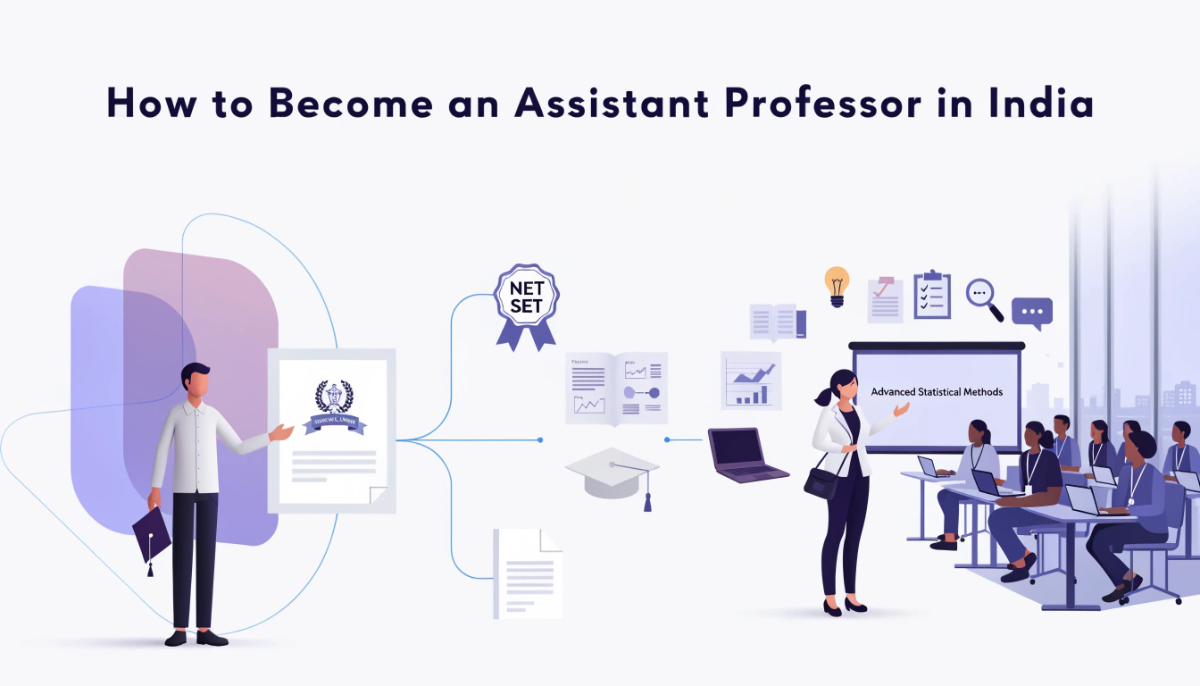
Teaching at the college or university level is one of the most respected career paths in India and it usually starts with becoming an assistant professor. If you enjoy a subject deeply and want to guide students while building a stable career, this role gives you both. Most students get confused about the exact qualifications, exams and steps needed for this path. This blog breaks down everything you need to know about how to become an assistant professor, from eligibility criteria to the right postgraduate degree, in one simple guide. By the end you will know exactly what to study and which steps to follow.
Who Is an Assistant Professor and What Does the Role Involve
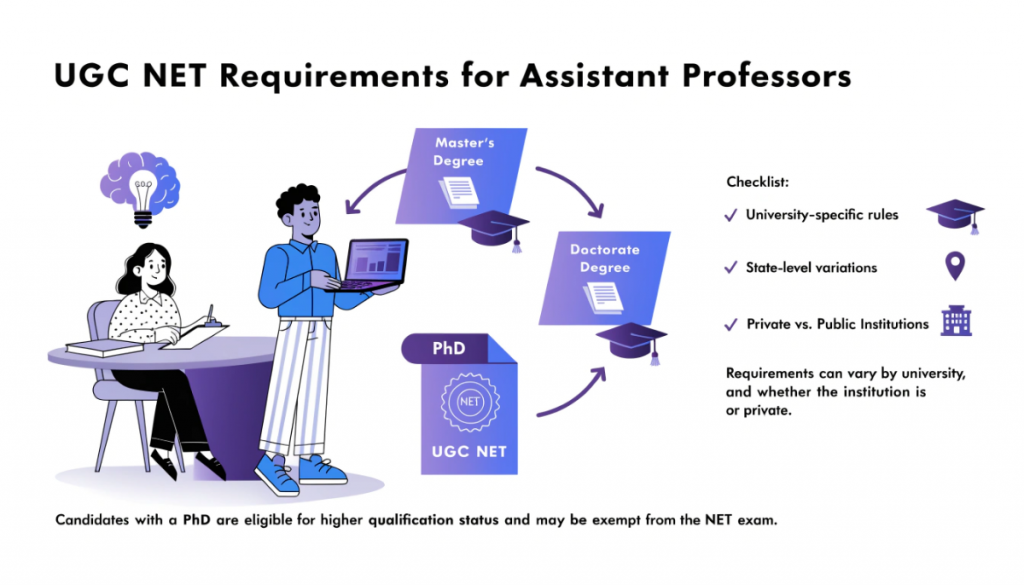
An assistant professor is an entry level teaching position at a college or university. This person teaches undergraduate and postgraduate students, assists senior faculty with academic work and takes on research responsibilities depending on the institution. It is often the first step toward becoming an associate professor or full professor later in your career.
The day to day work of an assistant professor includes the following:
Delivering lectures and preparing course material, which means you need strong command over your subject and the ability to explain it clearly.
Evaluating assignments and exams, since grading fairly and giving useful feedback directly affects student outcomes and your own credibility as a teacher.
Guiding student projects and research work, because mentoring is a core part of the job once you move beyond basic classroom teaching.
Publishing research papers and attending academic conferences, which helps in career growth and is often required for promotion to higher academic ranks.
Handling administrative duties such as academic committees or department coordination, which becomes more common as you gain experience in the role.
Is UGC NET Compulsory to Become an Assistant Professor
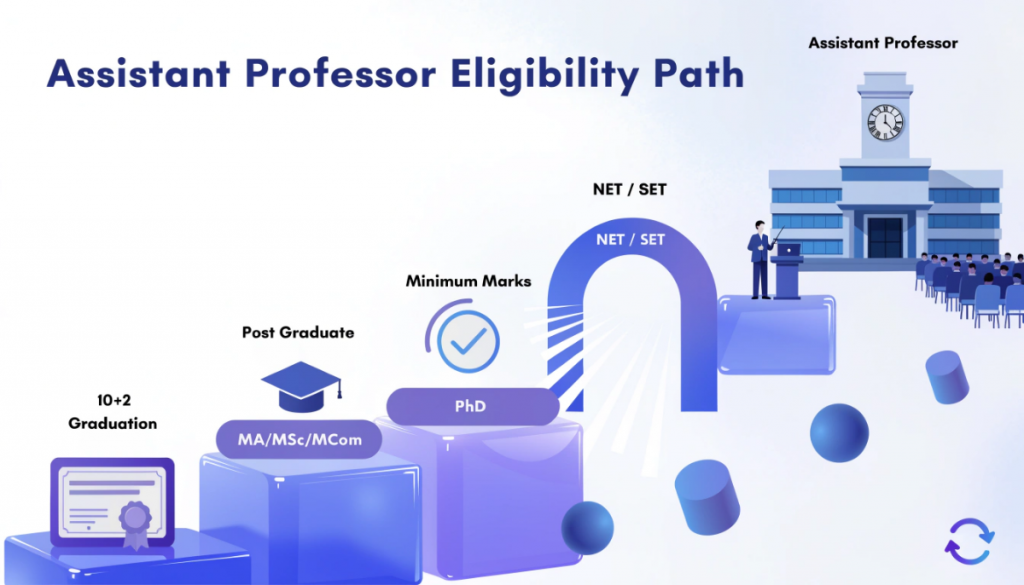
For a long time clearing the UGC NET exam was treated as a mandatory requirement for anyone who wanted to become an assistant professor in India. This has changed in recent years. The University Grants Commission has proposed draft regulations that remove NET as a compulsory requirement for the role in many cases.
Here is what the updated guidelines generally suggest:
Candidates with a postgraduate degree and the required minimum percentage can be considered eligible for assistant professor positions, even without clearing NET.
Candidates holding a PhD are exempted from the NET exam entirely, since a doctoral degree is already treated as a higher qualification for teaching roles.
Many state universities and private colleges have started following this relaxed criterion, though some institutions may still prefer NET qualified candidates during recruitment.
It is always a good idea to check the specific eligibility notice of the university or college you are applying to, since rules can vary slightly by state and institution type.
Eligibility Criteria to Become an Assistant Professor
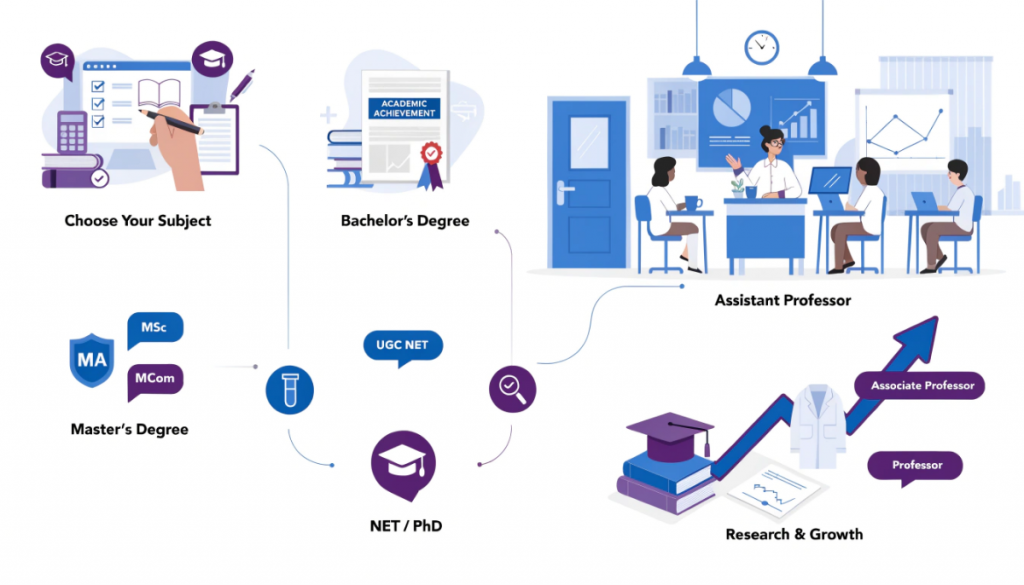
If you are planning your education around the goal of becoming an assistant professor, here is the eligibility path you should keep in mind:
Complete your 10+2 in any stream, followed by a bachelor’s degree, since a graduate degree is the basic entry point for any teaching career at the college level.
Pursue a postgraduate degree such as an MA, MSc or MCom in the subject you want to teach, as this is the core qualification required for an assistant professor post.
Score the minimum required percentage in your postgraduate degree, which is usually around 55 percent for the general category and slightly relaxed for reserved categories as per UGC norms.
Many recognised online postgraduate programs keep entry requirements accessible. For example an online MA in English typically only asks for graduation in any discipline with around 45 percent marks in the last qualifying exam, which means students who did not score very high marks can still work toward this career.
Clear NET or SET where the institution requires it, or complete a PhD if you want to skip the NET requirement altogether and also improve your long term career prospects.
Step by Step Path to Become an Assistant Professor
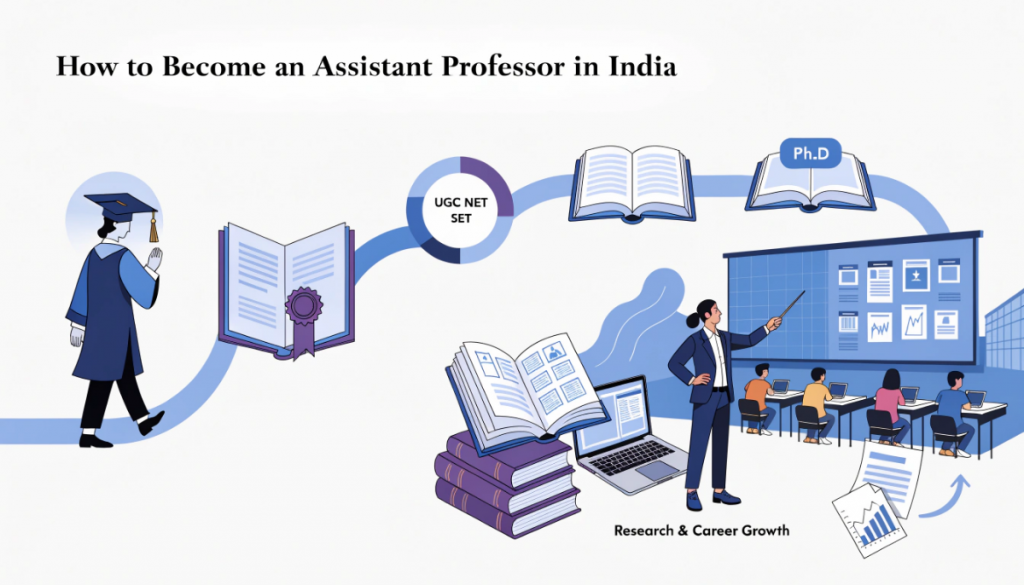
It helps to plan this career early so you are not scrambling for qualifications later. Here is the exact path you can follow:
Finish school and pick a stream and subject combination in undergraduate studies that matches the subject you eventually want to teach.
Complete your bachelor’s degree with good academic performance, since this becomes the foundation for your postgraduate application and future teaching subject.
Enrol in a master’s degree in your chosen subject, whether on campus or through an online mode, since both are accepted for assistant professor eligibility as long as the degree is UGC recognised.
Prepare for and attempt UGC NET if your target institution requires it, or start planning a PhD if you want a stronger and more flexible qualification.
Start applying for assistant professor openings at colleges and universities once your postgraduate degree and other eligibility requirements are complete.
Continue building your research profile through papers and seminars, since this supports both your current role and future promotion to associate professor or professor.
Skills You Need Along With the Right Degree

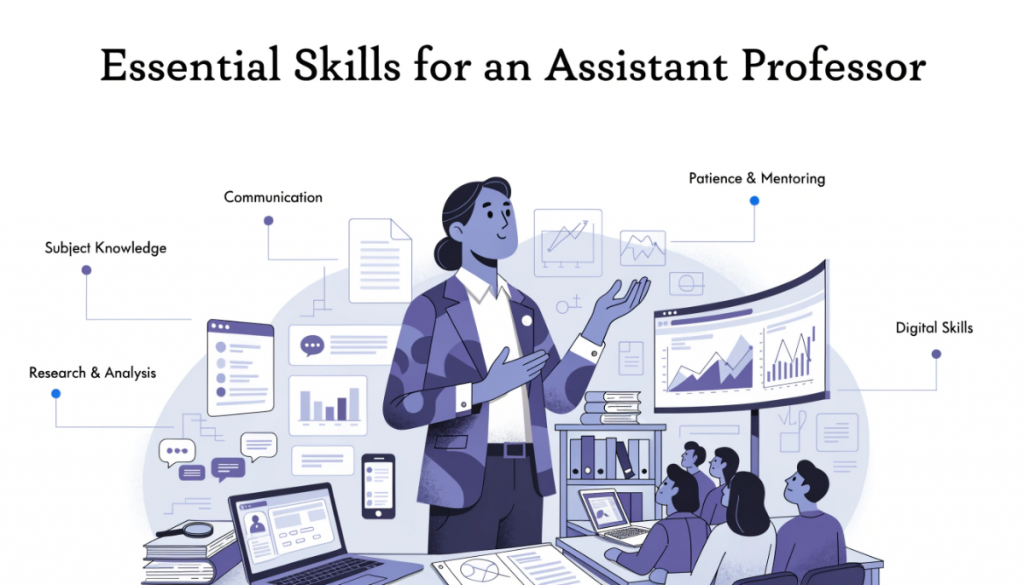
A degree alone does not make someone a good assistant professor. Along with academic qualifications, certain skills make a real difference in how successful you are in this career:
Strong subject knowledge and continuous reading habits, since students expect depth and updated information rather than textbook repetition.
Clear communication and public speaking ability, because explaining complex ideas in a simple way is the core skill of any good teacher.
Research and analytical thinking, which helps you contribute academic papers and stay relevant in your field over the years.
Patience and mentoring ability, since guiding students through doubts and academic struggles is a daily part of the job.
Comfort with digital tools and online teaching platforms, as more classrooms now use presentations, learning management systems and recorded content alongside regular lectures.
How an Online Postgraduate Degree Helps You Become an Assistant Professor
Not everyone can pause their job or personal responsibilities to pursue a full time master’s degree, and this is where an online postgraduate program becomes useful for anyone aiming to become an assistant professor.
You can study at your own pace and schedule classes around your existing job, which means working professionals do not have to choose between income and further education.
Online degrees from recognised universities carry the same value as regular degrees for assistant professor eligibility, as long as the program is UGC entitled.
You save on costs like hostel and daily commute, which makes higher education more affordable while you build toward a teaching career.
Access to recorded lectures and flexible study material means you can revisit difficult topics as many times as needed instead of relying only on classroom notes.
An online MA in English, for instance, prepares you with strong literary knowledge and communication skills, both of which are directly useful once you start teaching at the college level.
Salary and Career Growth of an Assistant Professor
Once you become an assistant professor, the pay and growth depend on whether you join a government institution or a private college, along with your qualifications and experience.
Government colleges generally follow UGC pay scales, where assistant professors start with a basic pay that grows steadily with experience, promotions and additional qualifications like a PhD.
Private colleges and universities offer varying pay packages, often in the range of 30,000 to 70,000 rupees a month depending on the institution, city and subject you teach.
With experience and further qualifications, an assistant professor can move up to associate professor and eventually full professor, along with administrative roles like head of department or dean.
A PhD alongside your postgraduate degree usually speeds up this promotion path and also opens doors to research grants and guiding PhD scholars of your own.
Choosing the Right Online Master’s Program
Since your postgraduate subject decides which department you can teach in, choosing the right online master’s program matters a lot if your goal is to become an assistant professor.
Pick a subject you are genuinely interested in, since you will be reading, researching and teaching the same subject for years once you start your academic career.
Check that the program is UGC recognised, because only a recognised online degree counts toward assistant professor eligibility during recruitment.
Look at the curriculum closely. An online MA in English, for example, usually covers literary genres, criticism, language studies and research methods, all of which build the exact expertise required for teaching English at the college level.
Confirm the eligibility criteria before applying. Many online MA English programs only require graduation in any discipline with around 45 percent marks, making them accessible even to students who did not score exceptionally in their bachelor’s degree.
Choose a program with live lectures, mentor support and self learning material, since these features make it easier to actually complete the degree while managing work or other commitments.
Conclusion
Becoming an assistant professor is a realistic and rewarding goal if you plan your education the right way. Focus on completing the correct postgraduate degree, keep an eye on updated UGC rules around NET and PhD, and build the skills that actually matter inside a classroom. Whether you choose a regular or an online master’s program, what matters most is picking a recognised course in a subject you truly want to teach. Start with the right degree today and the path to becoming an assistant professor will only get clearer from here.

Book Your
Free Session
Connect with our experts and get personalised guidance for your career, course selection, and future goals.
📖 Sources & References
✓ Verified 2026Verified higher education, assistant professor eligibility, UGC regulations, NET requirements and online postgraduate education information based on official institutional sources.
- University Grants Commission – UGC Regulations Official regulations and minimum qualification frameworks governing higher education and academic appointments in India
- UGC – Minimum Qualifications for Teachers and Academic Staff Regulatory framework covering minimum qualifications and standards for appointment of teachers and academic staff
- UGC – Distance Education Bureau Official information on recognised and entitled higher education institutions and online and ODL programmes
- UGC – Equivalence of Online and Conventional Degrees Official guidance confirming equivalence of recognised undergraduate and postgraduate online or ODL degrees with corresponding conventional degrees
- UGC – Compendium of Regulations Regulatory provisions covering equivalence of qualifications obtained through conventional, ODL and online modes
- National Testing Agency – UGC NET Official information on the UGC-NET examination for eligibility for Assistant Professor, JRF and related academic pathways
- Ministry of Education – Government of India National higher education policies, academic development initiatives and education frameworks in India
- National Career Service – Government of India Career information, employment guidance and professional development resources for learners and job seekers
- Shoolini Online – Postgraduate Programmes Online postgraduate education and flexible learning options for career-focused learners