
A lot of students use distance education and online education as if they mean the same thing, and honestly it is an easy mistake to make since both let you study without attending a physical classroom every day.
But the difference between distance and online education actually runs fairly deep, from how classes are delivered to how much support you get from faculty along the way. Picking the wrong one for your situation can mean the difference between a smooth learning experience and a frustrating one. In this blog we will break down exactly how these two modes differ, where each one still makes sense and what to check before you enroll in either program.
What Is Distance Education and What Is Online Education
Before comparing the two, it helps to understand what each term actually means, since a lot of the confusion comes from universities using these words loosely in their marketing material and websites.
Distance Education
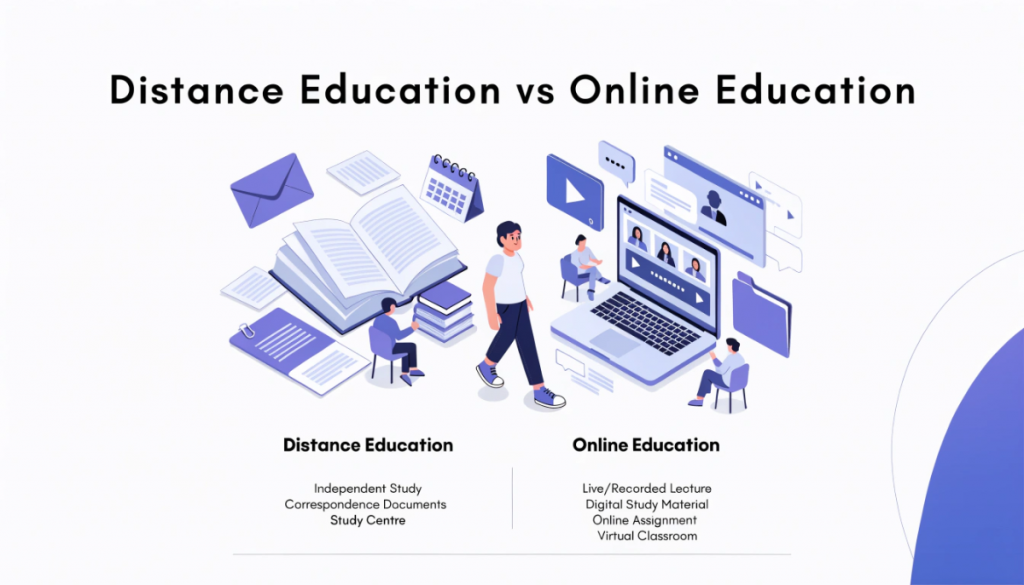
Distance education, sometimes called correspondence education, is a mode of learning where students receive study material through post or a basic online portal and complete assignments independently, submitting them by mail or during periodic visits to a nearby study centre. It relies far less on live interaction and far more on self study using printed or scanned material.
This mode has existed for decades, long before the internet became common, and many universities still run it largely the same way, with only minor digital additions layered on top of an otherwise traditional correspondence model built around postal delivery and periodic centre visits.
Online Education
Online education delivers the entire learning experience through the internet, including live or recorded lectures, digital study material, assignments, discussions and exams, all accessed through a learning management system. It is built around consistent digital interaction rather than occasional physical touchpoints alone.
This mode grew rapidly once internet access became far more widespread and even more so after institutions were forced to adapt during the pandemic, when live digital classrooms went from a niche option to a mainstream necessity almost overnight across schools, colleges and universities worldwide.
Difference Between Distance and Online Education Explained
The difference between distance and online education becomes much clearer once you break it down into specific aspects rather than treating it as one vague, general comparison.
Course Delivery Mode
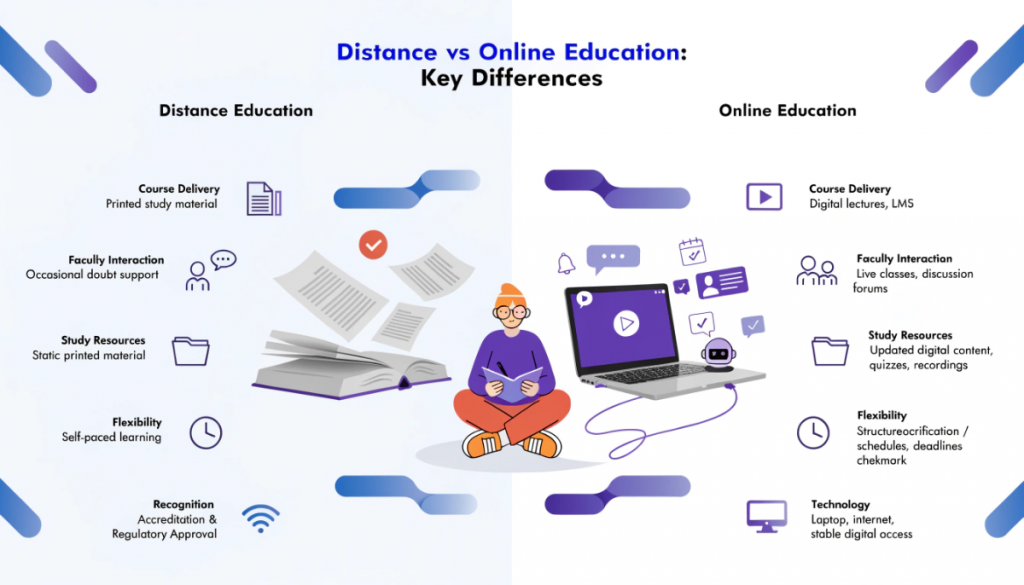
Distance education traditionally relies on printed material sent by post, sometimes supplemented with basic recorded content or CDs mailed alongside the core course material. Online education, on the other hand, is delivered entirely through the internet using video lectures, digital notes and an interactive learning platform, which makes access far more immediate and consistent.
The gap here has widened significantly in recent years, since online platforms now routinely include features like downloadable notes, mobile access and progress tracking, none of which a purely postal delivery system can realistically offer to students spread across different regions.
Interaction With Faculty
This is one of the sharpest points in the difference between distance and online education. Distance learners typically have minimal direct contact with faculty, mostly limited to occasional doubt clearing sessions or emails. Online learners usually get regular live classes, discussion forums and direct access to instructors, which makes doubt resolution far quicker.
For subjects that are naturally much harder to self study, like advanced mathematics or anything requiring step by step explanation, this difference in faculty access can genuinely affect how well a student actually grasps the material over a full semester, not just how convenient the course feels.
Study Material and Resources
Distance education generally provides static printed material that does not get updated very often across academic years. Online education typically offers digital resources that are easier to update, supplemented with recorded lectures, quizzes and interactive assessments that adapt more easily to changing course content.
In fast moving fields like technology or finance, this gap matters quite a bit, since printed material from several years ago can genuinely fall behind current industry practice in a way that digital content, refreshed regularly, tends to avoid.
Students often underestimate how much this affects real learning outcomes until they encounter a topic that has changed significantly since their printed material was originally published, at which point the limitation becomes obvious rather quickly.
Flexibility and Pace
Both modes offer flexibility compared to a full time on campus program, but they differ quite a bit in how that flexibility actually works. Distance education usually allows a very loose, self paced structure with minimal scheduled activity. Online education offers flexibility too, but often within a more structured framework of scheduled live sessions and deadlines that keep students on track.
This structure can actually be an advantage for students who struggle with pure self discipline, since having a fixed class time and a clear deadline tends to keep learning consistent rather than letting it pile up until the last minute right before an important exam.
Recognition and Accreditation
Both distance and online degrees can be valid and recognized, but the accrediting bodies and standards involved actually differ quite a bit. In India, distance programs are typically regulated separately from online programs, and it is worth checking that any program you consider, whether distance or online, is properly approved by the relevant regulatory body before enrolling.
Skipping this check is one of the more costly mistakes students make, since an unrecognized qualification can create real problems later, whether that is during a job application, a government exam eligibility check or when trying to pursue further education based on that degree.
Technology and Connectivity Requirement
Distance education requires very little beyond basic access to post and occasionally a computer for submitting assignments online. Online education requires a stable internet connection and a device capable of streaming live classes, which can be a genuine barrier for students in areas with limited connectivity.
This is a practical consideration that often gets overlooked in the excitement of choosing a course, but a poor internet connection can quietly derail an entire semester of live classes if it is not accounted for beforehand and a backup plan is not in place.
Advantages of Online Education Over Distance Education
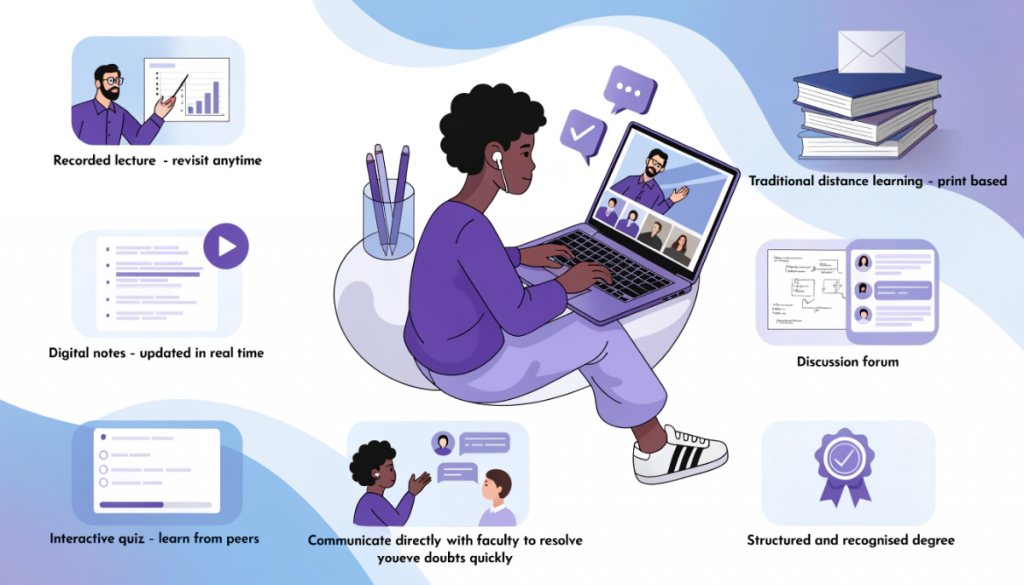
For most students today, online education tends to offer a genuinely more engaging and better supported experience compared to traditional distance learning.
That said, these advantages only hold up if the online program is genuinely well run, since a poorly managed online course with inconsistent live sessions can end up feeling just as disconnected as traditional distance learning, despite using largely the same underlying technology.
- Regular interaction with faculty means doubts get resolved quickly instead of piling up until the next scheduled study centre visit.
- Digital content and recorded lectures can be revisited anytime, which is far more convenient than relying only on printed material that cannot easily be replayed.
- Online platforms often include quizzes, discussion forums and peer interaction that make the learning experience feel closer to a real classroom setting.
- Course updates and revisions happen more easily in a digital format compared to reprinting and redistributing physical study material to every enrolled student.
- Many online programs now carry recognition and structure comparable to on campus degrees, which was genuinely harder to find in distance education a few years ago.
When Distance Education Still Makes Sense
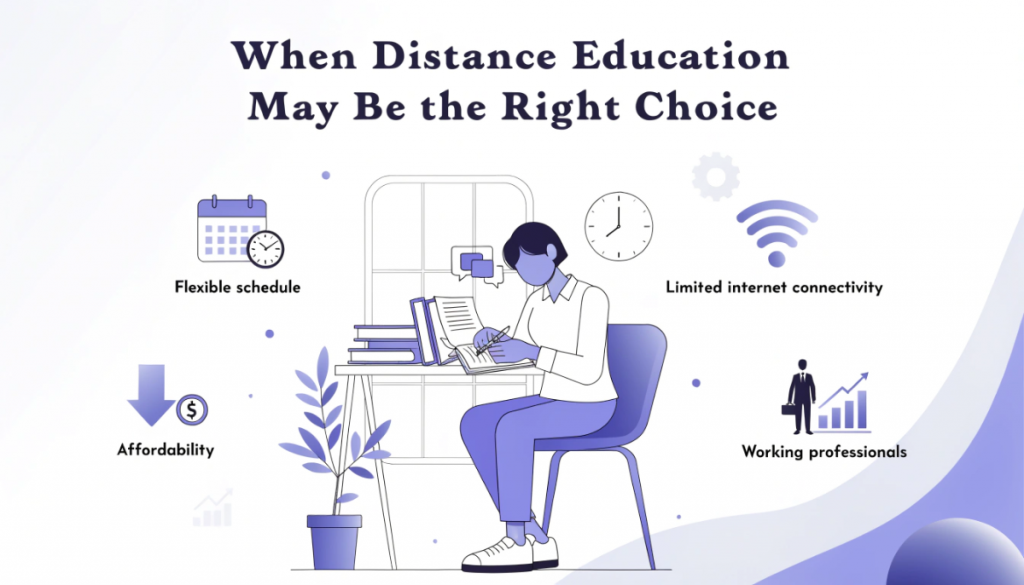
Despite online education gaining popularity, distance education still fits certain situations better and should not be dismissed entirely.
It is worth remembering that distance education has produced generations of successful graduates well before online platforms even existed, and for the right student in the right circumstances, it remains a genuinely practical and respectable option rather than an outdated one.
- Students in areas with poor or unreliable internet connectivity may find distance education more practical than relying on live online sessions that keep buffering or dropping.
- Learners who genuinely prefer studying at their own pace without fixed schedules often find the looser structure of distance education more comfortable to manage alongside other commitments.
- Distance education can sometimes work out more affordable, since it involves fewer technology and platform costs on the institution’s end compared to running live digital infrastructure.
- Working professionals with unpredictable schedules may find it easier to manage printed material on their own time rather than attending scheduled live classes that clash with work.
Which One Should You Choose
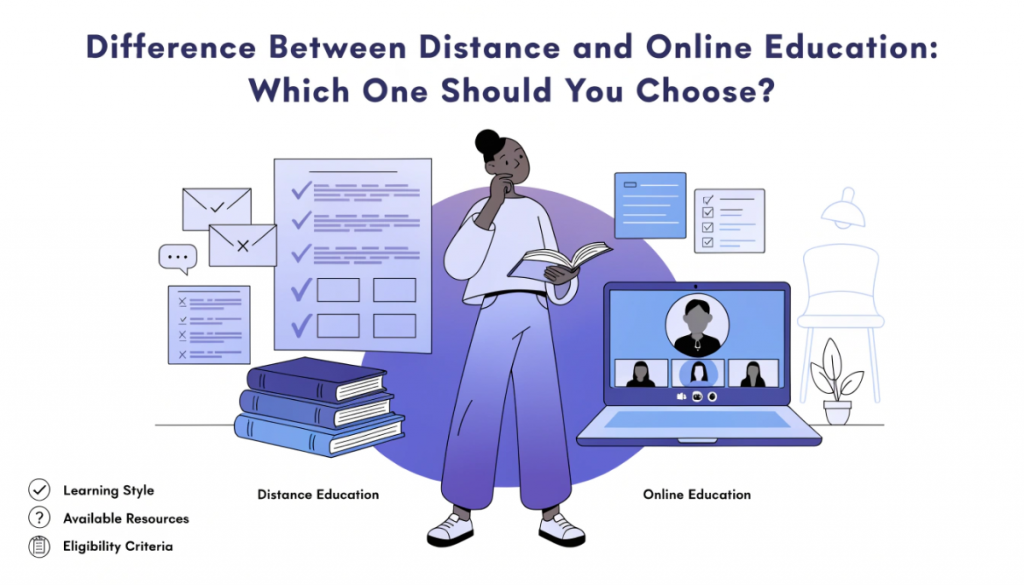
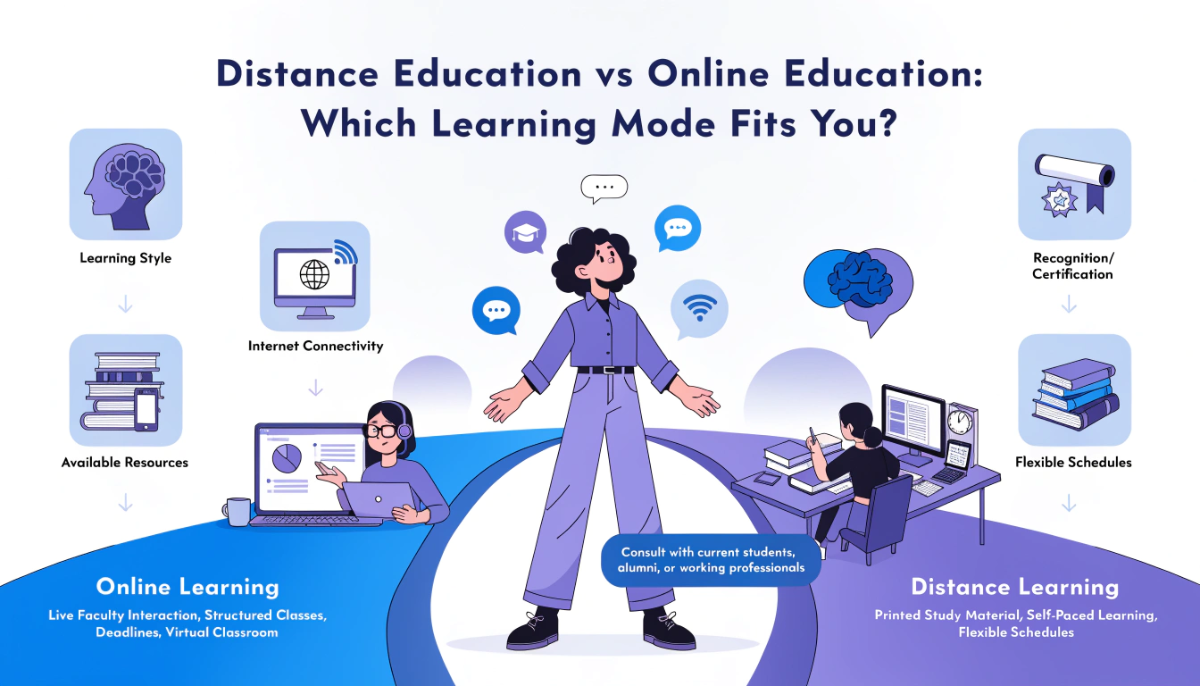
Deciding between the two really comes down to how you personally learn best and what resources you have access to. If you value regular interaction, structured deadlines and a learning experience that closely resembles a real classroom, online education is generally the better fit. If your internet access is inconsistent or you strongly prefer complete flexibility with minimal scheduled interaction, distance education might suit you better.
Talking to current students or alumni of a specific program before enrolling is also genuinely worth the effort, since their actual day to day experience often reveals more about how a course really runs than anything listed on a glossy website or in a printed brochure.
It also helps to think about how your future employer might view the qualification. Online degrees from recognized universities have gained much stronger acceptance in recent years, while some employers still view certain distance qualifications with a bit more caution depending on the accrediting body involved and the sector they are hiring for.
If you are unsure how a specific qualification is perceived in your target industry, a quick conversation with a working professional already established in that field can clear up more genuine doubt than hours spent searching for general opinions online.
Eligibility Criteria for Online Degree Programs
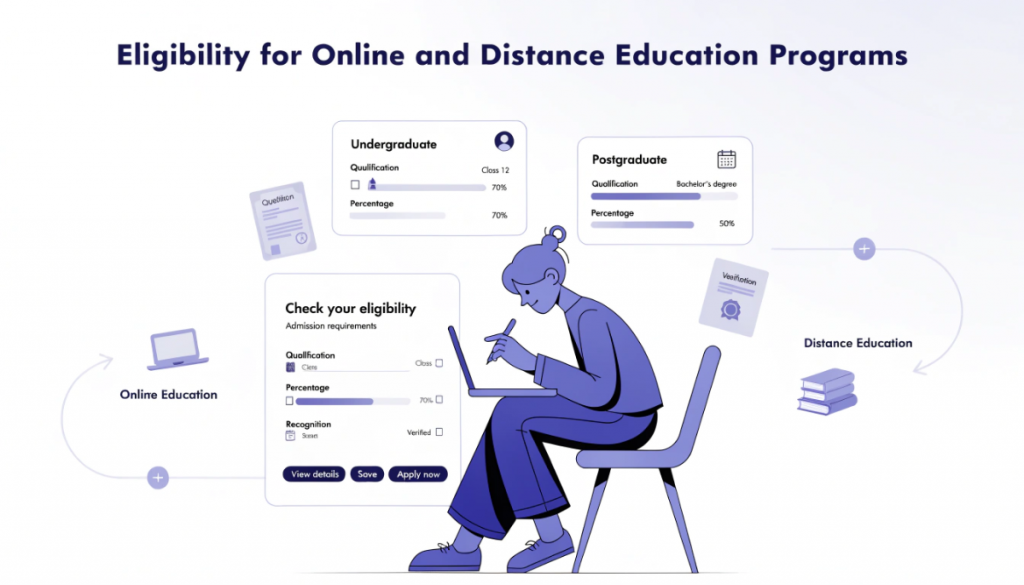
Regardless of which mode you eventually choose, checking eligibility properly before applying saves a lot of time and confusion later. Most recognized online degree programs in India, whether at the undergraduate or postgraduate level, follow a fairly similar eligibility pattern.
It is worth noting that distance education programs sometimes carry slightly different eligibility requirements depending on the regulatory framework they fall under, so always confirm the specific criteria on the official admission page rather than assuming it matches an online program exactly. This small step of double checking can save weeks of back and forth later if an application gets rejected purely on a technicality that could have been avoided.
- For undergraduate programs, completion of class 12 or an equivalent qualification from a recognized board, generally with a minimum aggregate of around 40 to 45%.
- For postgraduate programs, a bachelor’s degree of at least three years duration from a recognized university, usually with a minimum aggregate of around 50%, relaxed to 45% for candidates from reserved categories.
- International applicants are generally asked for a slightly higher aggregate, often around 60% in their qualifying examination.
- Reservation of seats as per applicable government policy, which most universities follow for both online and on campus programs.
Since most online programs admit students on merit rather than a mandatory entrance exam, this route tends to work well for students and working professionals who want a flexible, recognized qualification without navigating a separate competitive exam alongside their existing commitments.
Conclusion
Regardless of which mode you eventually choose, checking eligibility properly before applying saves a lot of time and confusion later. Most recognized online degree programs in India, whether at the undergraduate or postgraduate level, follow a fairly similar eligibility pattern.
It is worth noting that distance education programs sometimes carry slightly different eligibility requirements depending on the regulatory framework they fall under, so always confirm the specific criteria on the official admission page rather than assuming it matches an online program exactly. This small step of double checking can save weeks of back and forth later if an application gets rejected purely on a technicality that could have been avoided.
- For undergraduate programs, completion of class 12 or an equivalent qualification from a recognized board, generally with a minimum aggregate of around 40 to 45%.
- For postgraduate programs, a bachelor’s degree of at least three years duration from a recognized university, usually with a minimum aggregate of around 50%, relaxed to 45% for candidates from reserved categories.
- International applicants are generally asked for a slightly higher aggregate, often around 60% in their qualifying examination.
- Reservation of seats as per applicable government policy, which most universities follow for both online and on campus programs.
Since most online programs admit students on merit rather than a mandatory entrance exam, this route tends to work well for students and working professionals who want a flexible, recognized qualification without navigating a separate competitive exam alongside their existing commitments.

Book Your
Free Session
Connect with our experts and get personalised guidance for your career, course selection, and future goals.
📖 Sources & References
✓ Verified 2026Verified information on distance education, online education, ODL and online learning regulations, degree equivalence, recognition, admission requirements and online higher education in India.
- UGC Distance Education Bureau Official information on Open and Distance Learning, Online Programmes, recognised institutions, programme status and regulatory provisions
- UGC DEB – ODL and Online Regulations Official UGC regulations governing Open and Distance Learning and Online Programmes, including the 2020 regulations and amendments
- UGC DEB – Online Learning Official information on online learning, digital course delivery, online examinations and requirements for online programmes
- UGC DEB – Equivalence of Degrees Official FAQ explaining the equivalence of recognised undergraduate and postgraduate degrees awarded through ODL and Online modes with conventional degrees
- UGC DEB – Recognised HEIs and Programmes Official database for checking recognised Open and Distance Learning and Online institutions and programmes
- UGC DEB – Student Precautions Official guidance for students on checking recognition status, approved programmes and other precautions before enrolling in ODL or Online programmes
- UGC DEB – DEB ID Official information on DEB-ID requirements for learners enrolling in recognised Open and Distance Learning and Online programmes
- Shoolini Online – Programmes Official details of Shoolini Online undergraduate and postgraduate programmes offered through its online learning platform
- Shoolini Online – Admissions Official admissions information for online degree programmes, including programme options, learning format and recognition information
- Ministry of Education – Government of India Government information and policies relating to higher education and education systems in India