
Many students finish Class 12 and wonder whether a commerce degree still leads to a good job. The short answer is yes because every business needs people who understand money and tax and records. BCom career opportunities cover accounting and banking and finance as well as government jobs and newer fields like fintech. This blog lists the main paths and explains what each one involves. It also covers the professional courses that raise your pay and the eligibility for an online BCom.
BCom Career Opportunities: Scope and What Employers Want
BCom career opportunities are wide because commerce skills are needed in almost every organisation. A company of any size has to keep accounts and pay taxes and plan budgets and report results. The degree prepares you for these tasks and it also opens the door to higher study.
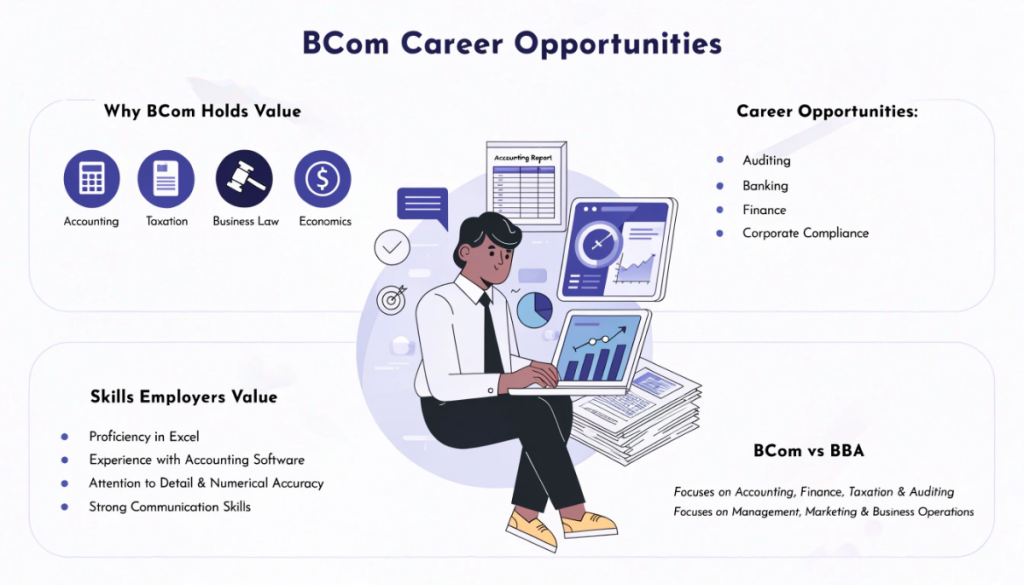
Why a BCom Still Holds Value
- The three year program teaches accounting and taxation and business law and economics, which means graduates understand how a business actually runs.
- Demand for finance and compliance staff stays steady in good years and bad years, since companies must file returns and keep audited accounts either way.
- BCom career opportunities exist in small firms and large corporates and government bodies, so you are never limited to one type of employer.
What Employers Look For
- Strong basics in accounting and taxation, because these are tested in almost every finance interview.
- Comfort with Excel and accounting software such as Tally, which means you can start contributing from the first week.
- Clear communication and attention to detail, since small errors in numbers can cause big problems later.
How the Degree Compares With Others
BCom is more focused on accounting and finance than a general business degree. BBA leans toward management and marketing. Both lead to jobs but BCom career opportunities are especially strong in accounts and audit and tax and banking roles. If you like numbers and rules then this path fits well.
Corporate and Finance BCom Career Opportunities
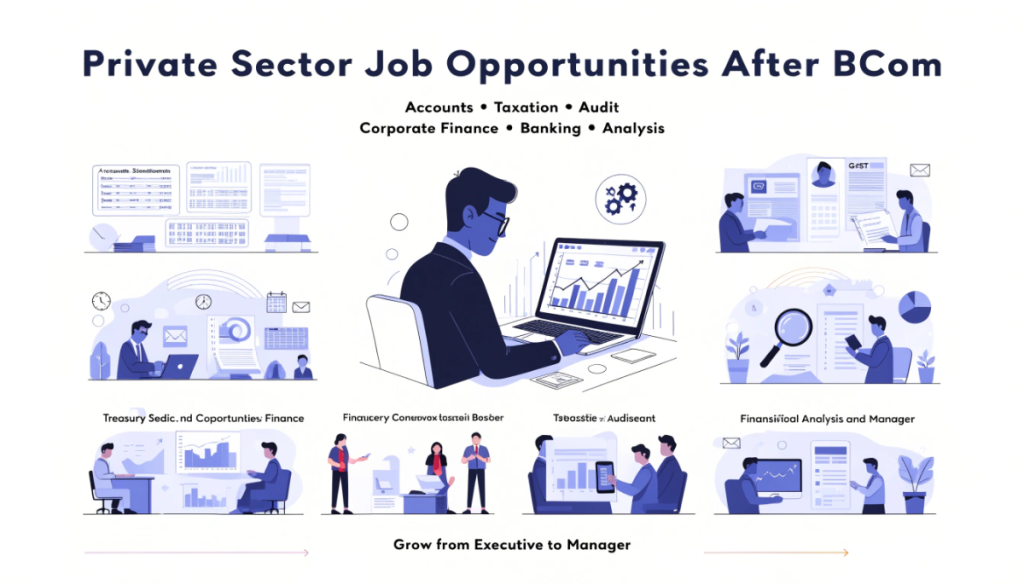
Most graduates start their careers in the private sector. These roles build practical skills and they often lead to bigger responsibilities within a few years.
Accounting and Bookkeeping Roles
- Accountant and accounts executive roles involve recording transactions and preparing reports, which means you work directly with the core of a business.
- Accounts payable and receivable executives manage payments and collections, so the job suits people who like order and routine.
- With experience you can move to senior accountant and finance manager roles, where you review work and guide a team.
Taxation and Compliance
- Tax assistant roles help prepare income tax and GST returns, which makes them a popular start for graduates who enjoy working with rules.
- Compliance executives make sure the company follows financial laws and reporting norms, so attention to detail is the main requirement.
Audit and Assurance
- Audit associates check financial records for accuracy at accounting firms and companies, which gives wide exposure to different businesses.
- The work can involve travel and long hours in busy seasons, but it builds a strong base for later roles in finance.
Roles in Treasury and Corporate Finance
- Treasury and cash management roles track company funds and payments, which means you learn how a business keeps enough cash to run every day.
- Budgeting and planning roles help managers set targets and track spending, so they are a good step toward finance manager positions.
Financial Analysis and Banking
- Financial analyst roles study company data and prepare forecasts, so they suit people who like analysis and presentations.
- Private banks and finance companies hire for loan processing and operations and customer relationship roles, which means BCom career opportunities in banking are strong and varied.
- Investment support and insurance roles also recruit commerce graduates, particularly those with some knowledge of markets.
Professional Courses That Expand BCom Career Opportunities
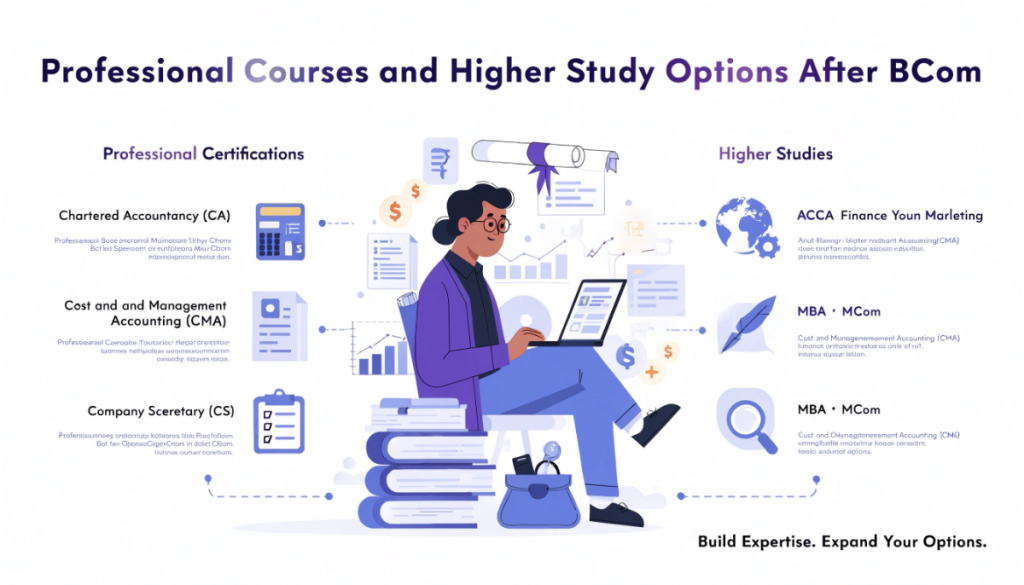
A bachelor’s degree gives you the base. The biggest jump in pay and responsibility usually comes from a professional or postgraduate qualification. BCom career opportunities grow a lot when you add one of the options below.
Chartered Accountancy
- The CA course is the most respected finance qualification in India. BCom students can prepare for it alongside the degree.
- Qualified chartered accountants are often reported to start at higher pay than regular graduates, but the exams are tough and take years.
Cost and Company Secretary Courses
- The CMA course focuses on cost and management accounting, which opens roles in manufacturing and corporate finance.
- The CS course covers company law and governance, so it leads to roles in legal and compliance teams.
Global Certifications
- ACCA and CPA are international accounting qualifications that help if you want to work abroad or with multinational firms.
- CFA focuses on investment analysis and portfolio management, which suits graduates who want to work in asset management or equity research.
Postgraduate Degrees
- An MBA in finance or marketing can move you into management roles faster, since it adds strategy and leadership skills to your commerce base.
- An MCom deepens your subject knowledge and supports teaching and research careers.
- Postgraduate study works best after a year or two of work, because real experience helps you choose the right specialisation.
Government and Banking BCom Career Opportunities
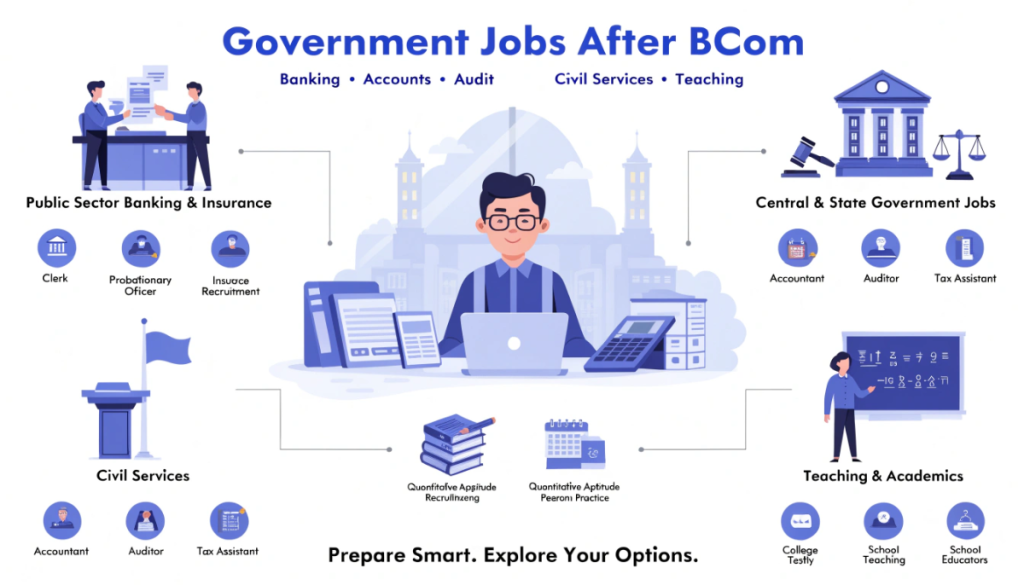
Many commerce graduates prefer stable jobs with fixed hours and clear promotion rules. Government and public sector jobs offer this. Several of the best known BCom career opportunities lie in this space.
Why Government Jobs Attract Commerce Graduates
- Job security and fixed working hours appeal to many families, which is why these BCom career opportunities remain popular despite tough competition.
- Pay scales and allowances are clearly defined, so you know how your income will grow over the years.
Public Sector Banks and Insurance
- Bank clerk and probationary officer exams are open to graduates and they are among the most popular choices for commerce students.
- Insurance companies and financial institutions also recruit through written tests, so regular practice for aptitude and reasoning pays off.
Central and State Government Jobs
- Exams such as SSC and state level recruitment tests fill posts in accounts and audit and tax departments, which means a BCom background is a direct advantage.
- Roles such as auditor and accountant and tax assistant exist across ministries and departments, with steady pay and benefits.
Civil Services and Other Services
Graduates can also attempt the civil services exam after completing their degree. Commerce and economics subjects can be chosen as optional papers. The preparation takes years and the competition is high so it works best when planned seriously. Many aspirants take a private job at the same time and continue exam preparation in the evenings.
Tips for Government Exam Preparation
- Study the official syllabus first and then solve previous year papers, which shows you the real pattern and difficulty level.
- Practise quantitative aptitude and reasoning daily, since these sections decide the cut off in most banking and SSC exams.
- Keep a backup plan such as a private job, because exam cycles can be delayed and income should not stop.
Teaching and Academic Roles
- After an MCom and a qualifying eligibility test you can apply for lecturer posts in colleges, which suits those who enjoy explaining concepts.
- School teaching roles in commerce are open to those who add a teaching qualification.
Emerging BCom Career Opportunities in New Fields
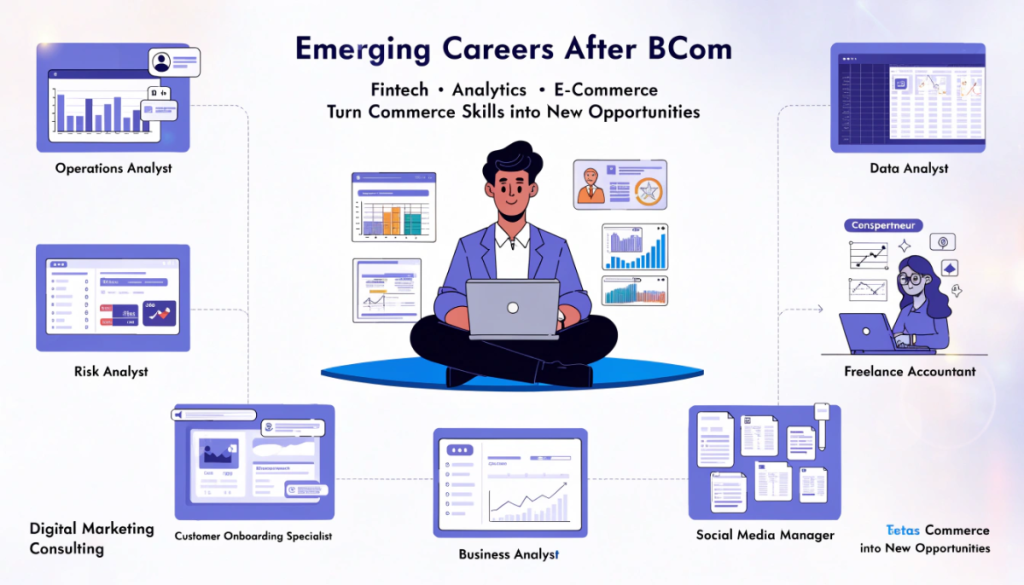
Some of the fastest growing BCom career opportunities sit outside the traditional accounting office. They combine commerce knowledge with technology or business skills.
Fintech and Digital Finance
- Fintech companies need people who understand payments and lending and compliance, so commerce graduates with basic tech comfort are in demand.
- Roles include operations analyst and risk analyst and customer onboarding specialist, which means you can enter without being a programmer.
Data and Business Analytics
- Learning Excel and SQL and a visualisation tool lets you work as a data or business analyst, which combines numbers sense with modern tools.
- Short certification courses in analytics are enough to start. They add real value to a BCom profile.
Digital Marketing and E-Commerce
- E-commerce firms hire for pricing and inventory and finance operations. Commerce graduates understand these areas well.
- Digital marketing roles reward people who can read campaign numbers and manage budgets, so a commerce background helps.
Entrepreneurship and Consulting
A commerce degree is a strong base for starting a business or working as a freelance accountant or tax consultant. Small businesses need help with GST filing and bookkeeping and financial planning. Building a client base takes time but it can grow into a full practice. Many graduates work for a few years first to gain experience and trust.
How to Prepare for BCom Career Opportunities
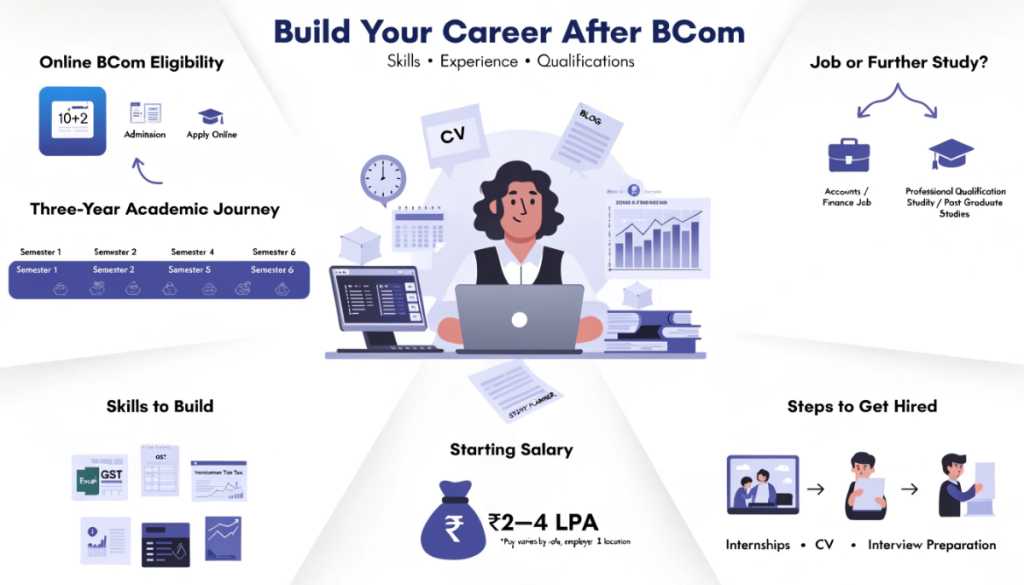
Good results come from planning early. Treat your degree years as preparation for the work you want and BCom career opportunities will open up faster.
Eligibility for an Online BCom Program
Online BCom programs keep entry rules simple. A candidate generally needs to have passed 10+2 in any discipline from a recognised board with at least 40 percent marks in the last qualifying examination. International applicants are usually expected to have around 60 percent marks. Reservation applies as per government policies. Admission is done online with document verification and no entrance exam such as CUET or JEE is normally needed. The program runs for three years across six semesters. Always confirm that the program is approved by UGC for the online mode so the degree is valid for jobs and further study.
Choosing Between a Job and Further Study
Some students want to start earning right after graduation while others prefer to continue studying. Neither choice is wrong. A good middle path is to take a job in accounts or finance and prepare for a professional exam in the evenings. This way you earn and learn at the same time and your BCom career opportunities widen with every year of experience.
Skills to Build During the Degree
- Learn Excel and a standard accounting tool, since almost every finance job uses them daily.
- Understand GST and income tax basics, which makes you useful to employers from the first day.
- Practise business writing and presentation, because finance professionals often explain numbers to people who are not experts.
- Add one specialist skill such as analytics or financial modelling, so your BCom career opportunities are not limited to entry level accounts work.
Salary Expectations at the Start
Pay varies by role and city and employer. Many sources show fresher packages for BCom graduates in the range of about 2 to 4 LPA with higher figures in audit and finance roles at larger firms. Professional qualifications like CA can lift starting pay well above this range. Treat these numbers as rough guides and check current job postings for the roles you want.
Steps to Land Your First Job
- Do an internship in an accounts or audit or bank office during the degree, which gives you real experience for your CV.
- Prepare for one professional exam or one government exam while studying, so you have a clear path after graduation.
- Build a simple CV that lists skills and tools first, since recruiters scan quickly.
- Use career support and mock interview services if your program offers them, because practice reduces nervousness in real interviews.
Conclusion
BCom career opportunities are broader than most students expect. They range from accounting and tax and banking jobs to professional courses and government exams and new roles in fintech and analytics. The degree gives you a solid base but your skills and extra qualifications decide how far you go. Pick a direction early and build the tools that direction needs. Even small steps such as learning Tally or finishing an internship make you stand out when recruiters compare similar profiles. With steady effort a BCom can lead to a stable and rewarding career.
Sources & References
✓ Verified 2026Explore these official resources for information on commerce careers, professional qualifications, government examinations, taxation, online degree recognition and salary research.
Note: Course eligibility, examination rules, salaries and job requirements may vary. Always consult the relevant official website for the latest details before applying or making career decisions.

Book Your
Free Session
Connect with our experts and get personalised guidance for your career, course selection, and future goals.