

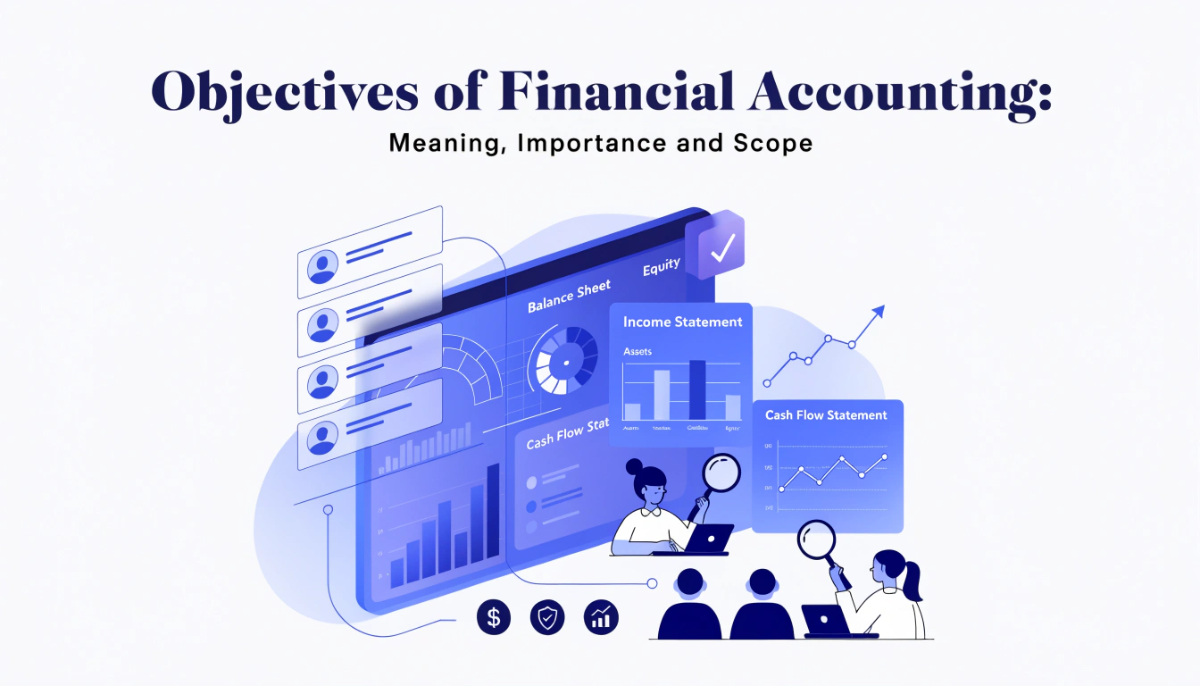
Every business, big or small, runs on numbers. Financial accounting is the system that turns those numbers into something usable, a clear picture of what a company earns, owes and owns. The objectives of financial accounting go beyond simply keeping a record. They shape how a business plans its next move, how investors decide where to put their money and how tax authorities check that everyone is playing fair. If you are studying commerce or just trying to understand how businesses stay accountable, knowing these objectives is a good starting point.
What Financial Accounting Actually Means
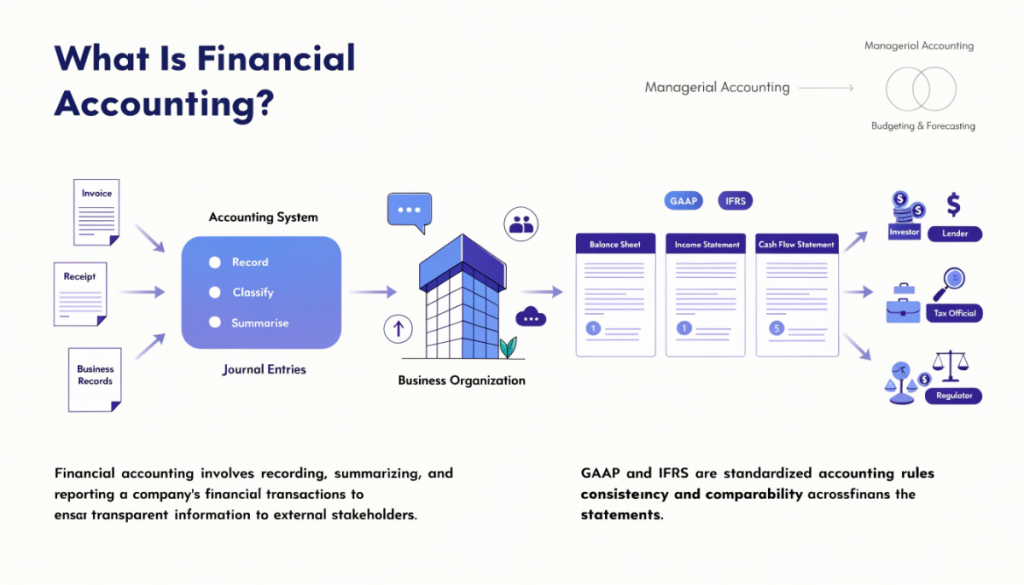
Financial accounting is the process of recording, classifying and summarising a company’s financial transactions so that the information can be shared with people outside the organisation. This includes investors, lenders, tax officials and regulators. Unlike managerial accounting, which is used internally to guide day to day decisions, financial accounting produces standard reports like the balance sheet, income statement and cash flow statement. These reports follow set rules such as GAAP or IFRS so that anyone reading them, whether in the same city or on another continent, can understand a company’s financial health without confusion.
Core Objectives of Financial Accounting
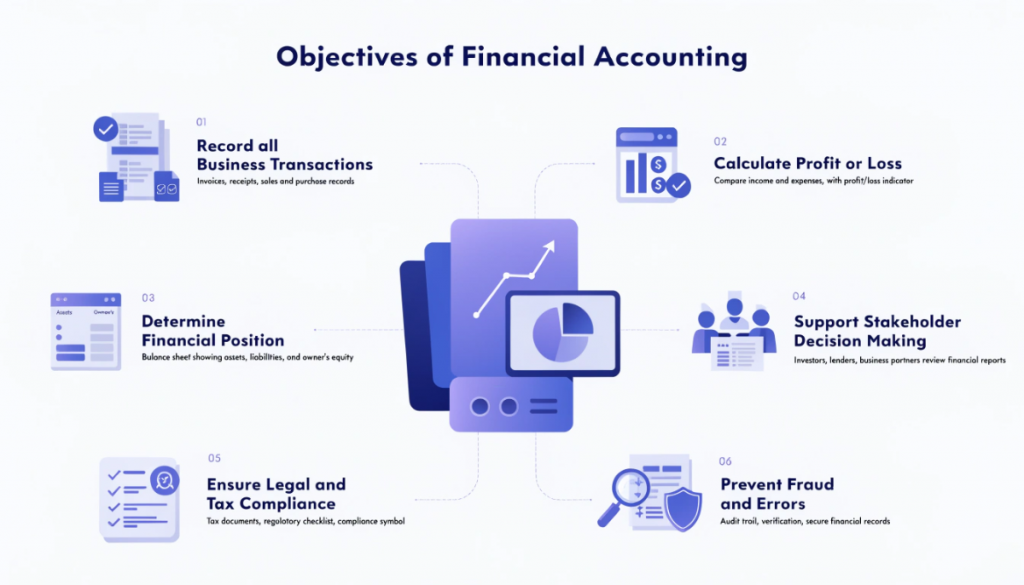
The objectives of financial accounting can be broken down into a few clear goals. Each one serves a different group of people who rely on financial data to make decisions.
Recording Business Transactions Systematically
The first and most basic objective is to keep an accurate, chronological record of every transaction a business makes. This includes sales, purchases, payments and receipts. Without a proper record, a business would have no way of knowing where its money is going or coming from. This record becomes the raw material for every report that follows.
Ascertaining Profit or Loss
A business needs to know whether it is actually making money. Financial accounting calculates profit or loss for a specific period by matching income against expenses. This tells owners and managers whether the business model is working or whether changes are needed before losses pile up.
Determining the Financial Position
Beyond profit, a company needs to know what it owns and what it owes at any given point. The balance sheet, prepared as part of financial accounting, lists assets, liabilities and owner’s equity. This snapshot helps everyone understand whether the business is financially stable or stretched too thin.
Helping Stakeholders Make Informed Decisions
Investors, lenders and business partners rarely have access to the internal workings of a company. They depend on financial statements to judge whether a business is worth investing in, lending to or partnering with. One of the central objectives of financial accounting is to give these outsiders reliable data so their decisions are based on facts rather than guesswork.
Ensuring Legal and Tax Compliance
Governments require businesses to maintain proper financial records for tax purposes. Financial accounting ensures that income, expenses and profits are reported accurately so that tax liabilities are calculated correctly. This keeps a business on the right side of the law and avoids penalties that come from poor record keeping.
Preventing Fraud and Errors
When transactions are recorded systematically and checked through audits, it becomes much harder to hide fraud or make careless mistakes. Financial accounting builds a paper trail that auditors and internal teams can follow, which acts as a natural check against manipulation.
Why These Objectives Matter for a Business
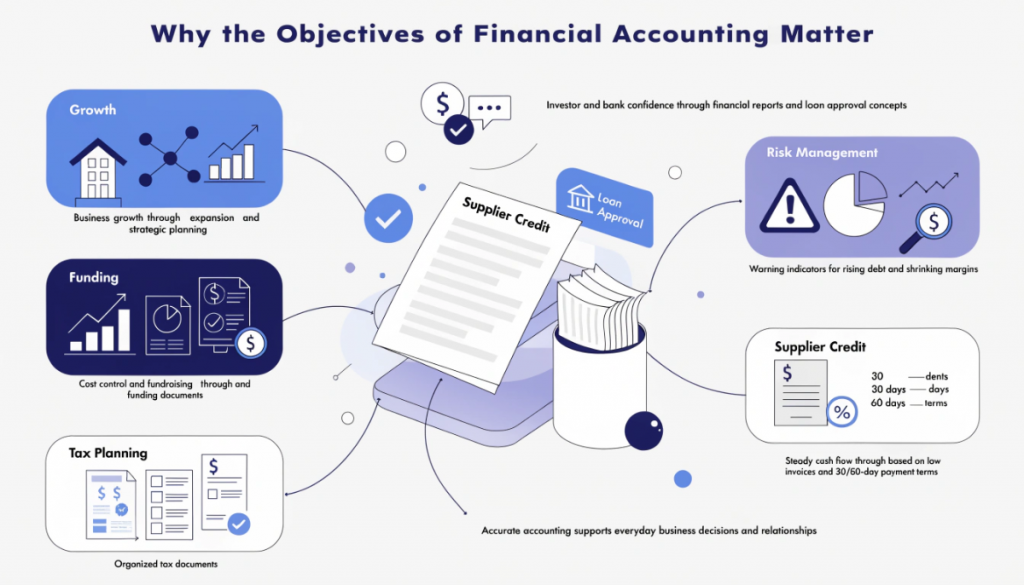
It is easy to think of financial accounting as paperwork that businesses handle because they have to. In practice, the objectives listed above directly affect how a company grows. A business that tracks its numbers well knows exactly when to expand, when to cut costs and when to raise funds. Investors trust businesses with clean financial records more than those with messy or inconsistent reporting. Even something as simple as applying for a bank loan depends on having accurate financial statements ready to show.
Tax planning is another area where these objectives come into play. A business that understands its own numbers can plan its tax outgo legally and avoid last minute surprises. Risk management also improves because financial statements often reveal warning signs, such as rising debt or shrinking margins, well before they become serious problems.
Suppliers and vendors also lean on these objectives before agreeing to extend credit. A supplier is far more comfortable offering thirty or sixty day payment terms to a business whose financial statements show steady cash flow rather than one with no visible track record. In that sense, the objectives of financial accounting do more than satisfy regulators, they actively help a business build the relationships it needs to operate day to day.
Principles That Support the Objectives of Financial Accounting
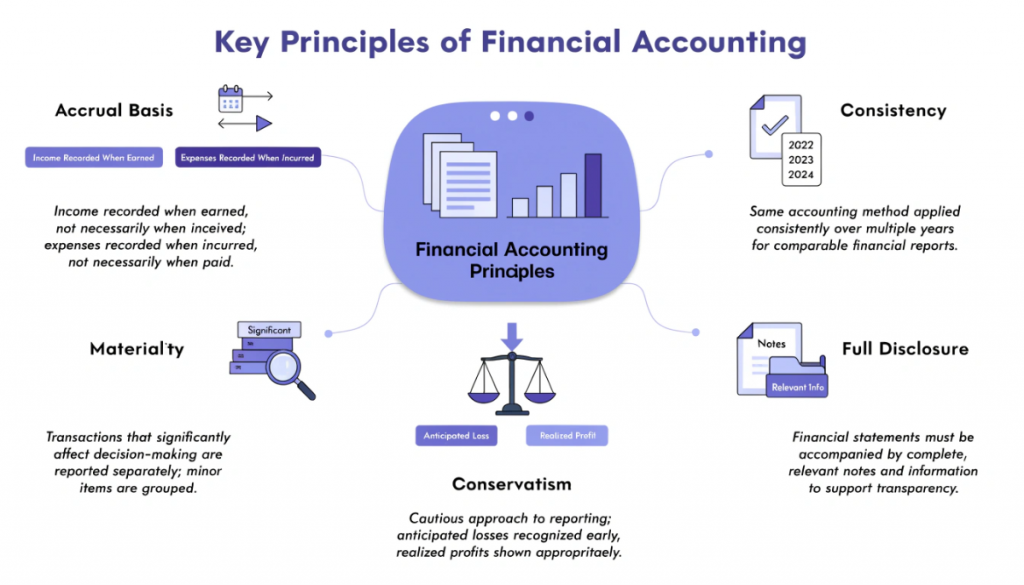
To achieve the objectives described above, financial accounting follows a set of consistent principles. These principles are what make financial statements comparable across companies and across time periods.
Accrual Basis of Recording
Income is recorded when it is earned and expenses when they are incurred, not necessarily when cash changes hands. This gives a more accurate picture of profitability than simply tracking cash in and cash out.
Consistency
A business should use the same accounting methods year after year. This makes it possible to compare this year’s performance with last year’s without the numbers being distorted by a change in method.
Materiality
Only transactions significant enough to affect decision making need to be reported in detail. Minor items that would not change how a reader interprets the statements can be grouped together.
Conservatism
Financial accounting takes a cautious approach. Losses are recognised as soon as they are anticipated while profits are recorded only once they are realised. This prevents businesses from overstating their financial health.
Full Disclosure
All information relevant to understanding a company’s financial position should be included in the statements or the notes attached to them. Hiding or omitting details defeats the purpose of financial accounting altogether.
The Financial Statements That Fulfil These Objectives
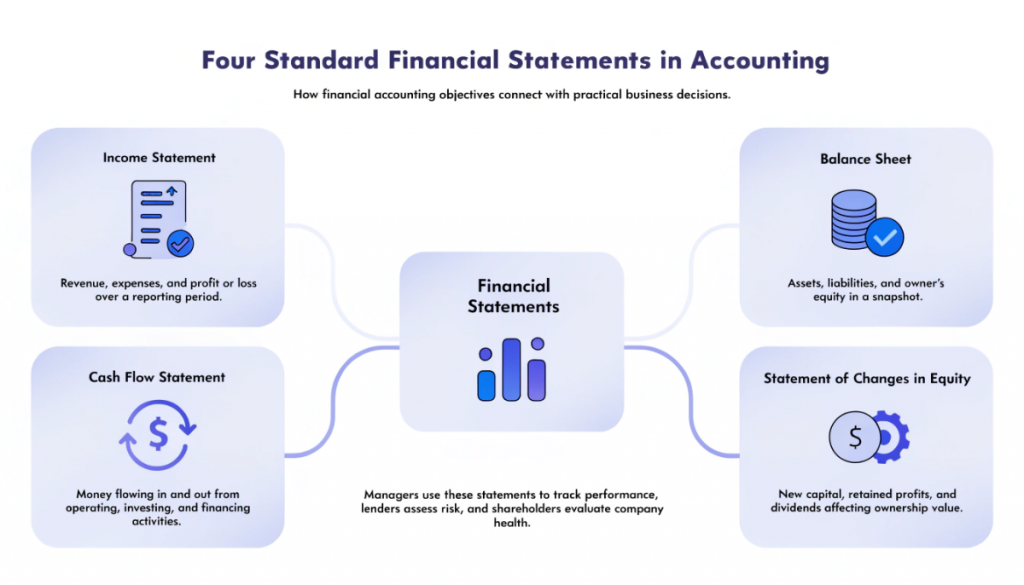
Every objective of financial accounting eventually shows up in one of the standard financial statements. Learning what each statement covers makes the objectives much easier to connect with real business practice.
Income Statement
Also called the profit and loss statement, this report lists revenue earned and expenses incurred over a specific period, usually a quarter or a year. The bottom line shows whether the business made a profit or ran at a loss. Managers use this statement to check if operating costs are eating into margins and whether pricing needs a rethink.
Balance Sheet
The balance sheet is a snapshot taken on a specific date rather than over a period. It lists assets on one side and liabilities plus owner’s equity on the other, and the two sides always balance. Lenders study this statement closely because it shows how much debt a business is carrying against what it actually owns.
Cash Flow Statement
Profit on paper does not always mean cash in the bank. The cash flow statement tracks money moving in and out through operating, investing and financing activities. A business can show a profit and still run short on cash if customers are slow to pay, which is exactly the kind of gap this statement exposes.
Statement of Changes in Equity
This statement explains how the owner’s stake in the business has changed over the reporting period, covering things like new capital brought in, profits retained and dividends paid out. It is smaller in size than the other three statements but still useful for shareholders who want to track how their ownership value is moving.
Common Mistakes That Work Against These Objectives
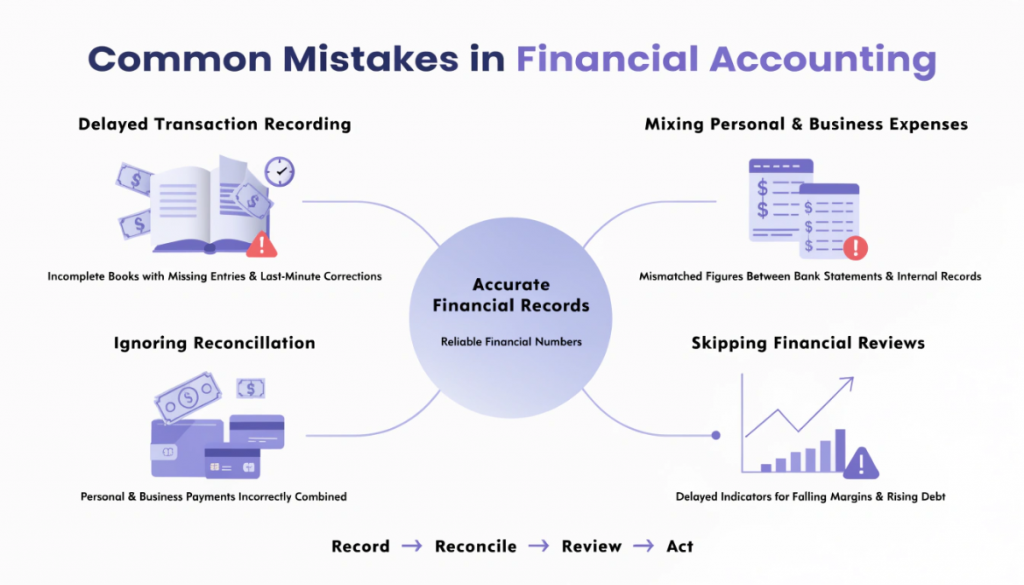
Even businesses that understand the objectives of financial accounting in theory sometimes fall short in practice. A few recurring mistakes tend to undo the benefits these objectives are supposed to deliver.
- Delaying the recording of transactions creates gaps in the books, which makes it harder to catch errors early and forces last minute corrections before reports are due.
- Mixing personal and business expenses blurs the real financial position of the company, since owners end up unsure which costs actually belong to the business.
- Ignoring reconciliation between bank statements and internal records lets small errors pile up unnoticed until they become costly to trace.
- Skipping regular reviews of financial statements means warning signs like falling margins or rising debt get spotted too late to act on.
Avoiding these habits keeps the objectives of financial accounting working the way they are meant to, giving a business reliable numbers it can actually act on.
Conclusion
The objectives of financial accounting are not just academic points to memorise. They explain why businesses keep records, prepare statements and follow strict accounting rules in the first place. From tracking profit and loss to helping investors make decisions and keeping a business compliant with tax laws, these objectives touch almost every part of how a company operates. Whether you are a student trying to understand the subject or a business owner trying to make sense of your own numbers, getting comfortable with these objectives makes the whole picture of financial accounting a lot easier to follow.
📖 Sources & References
✓ Verified 2026Verified sources covering financial accounting, accounting principles, accrual accounting, financial statements, books of account, reporting requirements, materiality, prudence and financial information for decision-making.
- ICAI – Framework for Preparation and Presentation of Financial Statements Accounting framework covering the objective of financial statements, users and their information needs, accrual basis, consistency, materiality, prudence, completeness and financial position
- ICAI – Accounting Standards Official ICAI Accounting Standards resources covering accounting principles and standards applicable to financial reporting
- ICAI – Compendium of Indian Accounting Standards Current ICAI compendium of Indian Accounting Standards and related financial reporting guidance
- IFRS Foundation – IAS 1 Presentation of Financial Statements Official guidance on the presentation and structure of financial statements, including financial position, profit or loss, cash flows and changes in equity
- Ministry of Corporate Affairs – Companies Act, 2013 Official Companies Act provisions on maintaining books of account, accrual basis, double-entry accounting and financial statements
- ICSI – Companies Act, 2013 Official Companies Act provisions covering books of account, accrual basis, double-entry accounting and maintenance of financial records
- Income Tax Department – Business or Profession Official tax guidance on business and professional income, accounting records and audit-related requirements
- Income Tax Department – Form 3CB-3CD Official information on audit reporting, books of account and reporting discrepancies identified during examination of accounts
- Income Tax Department – Statutory Forms Official tax filing resources and statutory forms connected with business accounts, audit reporting and financial information
- ICAI – Conceptual Framework for Financial Reporting ICAI framework explaining the conceptual basis for financial reporting and the development of financial information under Indian Accounting Standards

Book Your
Free Session
Connect with our experts and get personalised guidance for your career, course selection, and future goals.