

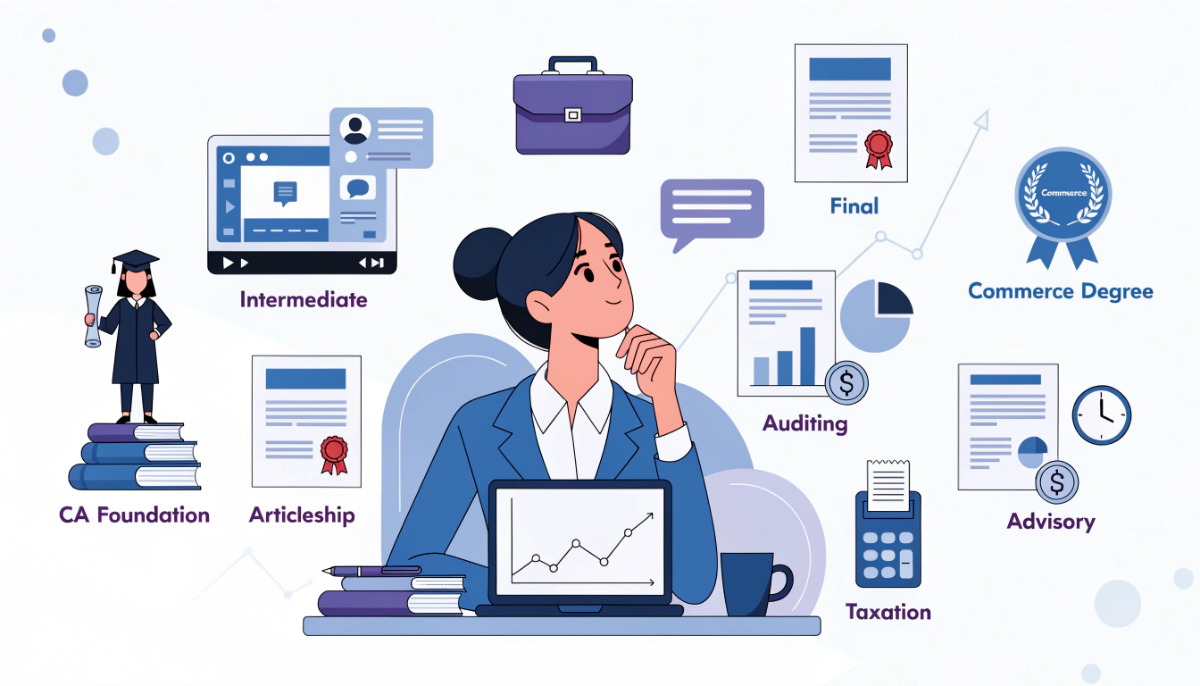
Ask any commerce student about their dream career and chances are chartered accountancy comes up within the first few answers. It is one of the most respected finance qualifications in India, known for its tough exams and even tougher reputation. But what is a chartered accountant actually responsible for beyond the title. This piece explains the meaning of the role, what the job really involves day to day and the complete path you need to follow to become one, along with the kind of career it eventually leads to.
What is a Chartered Accountant, in Simple Terms
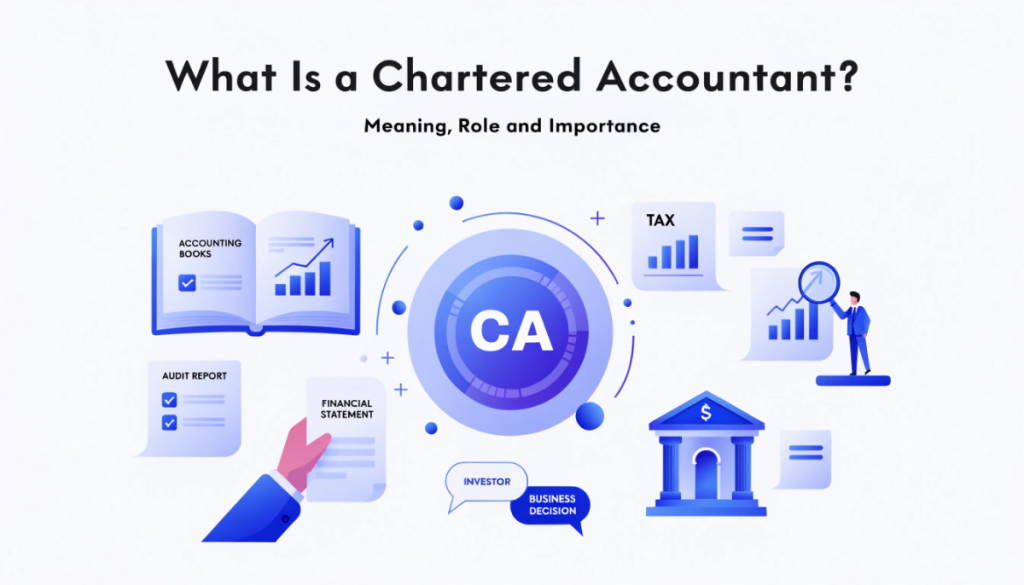
A chartered accountant, commonly shortened to CA, is a finance professional who is qualified to handle accounting, auditing, taxation and financial advisory work for individuals and businesses. In India, this qualification is granted by the Institute of Chartered Accountants of India, known as ICAI, after a candidate clears a series of exams and completes a mandatory period of practical training. Once qualified, a CA can sign off on audited financial statements, something that most other finance professionals are not legally permitted to do, which is exactly what gives the title its weight in the business world.
The easiest way to understand what is a chartered accountant is to think of them as the professionals businesses turn to when financial records need to be accurate, compliant and trustworthy enough for banks, investors and tax authorities to rely on. This trust is exactly why the designation carries so much weight across sectors that have very little else in common.
What a Chartered Accountant Actually Does
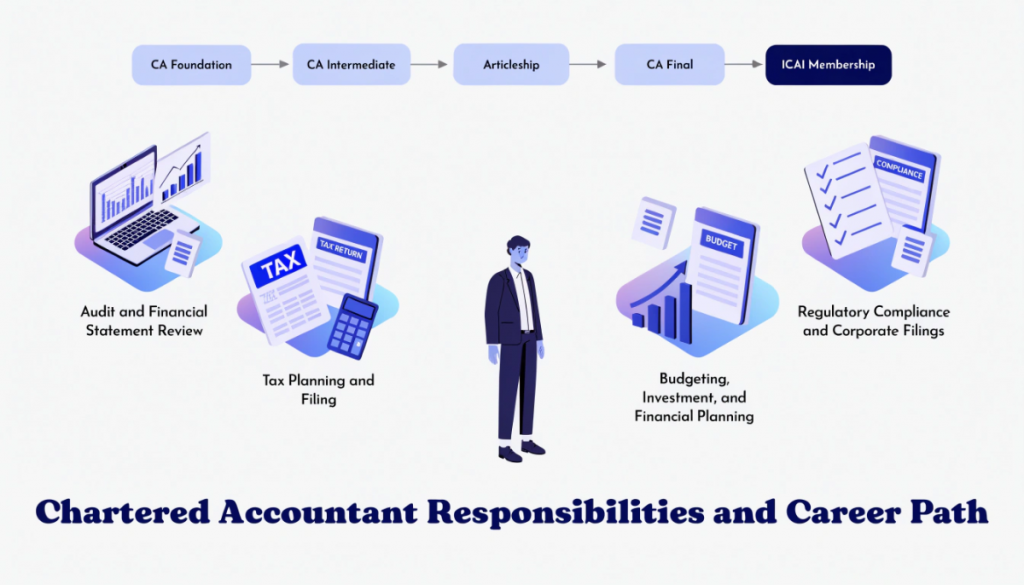
The day to day work of a CA covers far more ground than most people expect. The role changes depending on whether they work in a firm, inside a company or independently, but a few core responsibilities stay consistent.
Auditing Financial Statements
One of the most well known jobs of a CA is auditing, where they examine a company’s books to confirm the numbers are accurate and free from fraud or error. This work protects shareholders, lenders and regulators who rely on these statements being correct.
Tax Planning and Filing
CAs help individuals and businesses plan their taxes legally while making sure returns are filed correctly and on time. Given how often tax rules change, this is one of the most in demand parts of the job.
Financial Advisory and Planning
Beyond compliance work, many CAs advise businesses on budgeting, investment decisions and cost control. Their training in reading financial data closely makes them useful voices in strategic business conversations.
Regulatory and Compliance Work
Companies need to follow accounting standards and corporate laws, and CAs make sure this happens correctly. This includes filings with regulatory bodies and making sure financial disclosures meet legal requirements.
The Path to Becoming a Chartered Accountant
Understanding what is a chartered accountant is only half the picture, since the path to becoming one is almost as well known as the title itself. The journey typically takes five to seven years and runs through three main stages under the ICAI framework.
CA Foundation Course
This is the entry point for students who register right after Class 12. It covers the basics of accounting, business laws, quantitative aptitude and economics, and clearing this exam opens the door to the next stage.
CA Intermediate Course
Graduates with a commerce background can skip the Foundation stage and register directly for Intermediate. This stage goes deeper into accounting standards, cost management, taxation and corporate law, and it is considerably tougher than Foundation.
Articleship Training
After clearing Intermediate, candidates must complete a three year practical training period under a practicing CA. This articleship is where theory turns into real experience, since trainees get hands on exposure to audits, tax filings and client work.
CA Final Course
While completing articleship, candidates also register for the CA Final, the last academic hurdle before qualifying. This stage covers advanced accounting, strategic financial management and auditing standards across two groups of papers.
ICAI Membership
Once the Final exam and articleship are both complete, candidates can apply for membership with ICAI. This is the final step that officially allows someone to use the CA title and practice as a chartered accountant.
Skills Needed to Become a Chartered Accountant
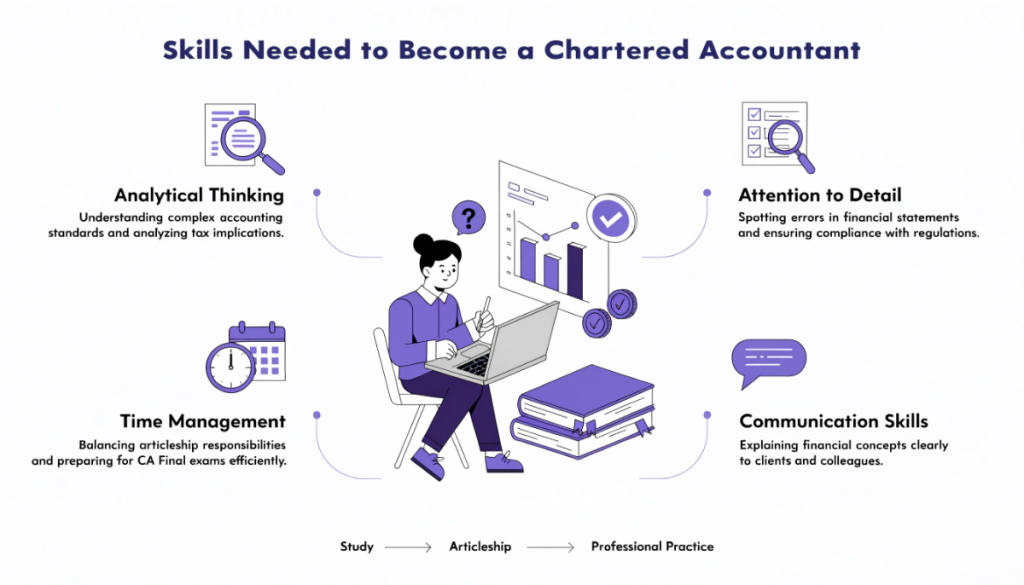
Clearing CA exams takes more than memorising formulas. A few skills consistently separate students who make it through from those who struggle.
- Strong analytical thinking helps when working through complex tax laws and accounting standards that rarely have a single straightforward answer.
- Attention to detail matters enormously since small errors in financial statements can lead to serious compliance issues for a business.
- Time management becomes critical during articleship, when candidates are juggling client work alongside exam preparation for the Final stage.
- Communication skills end up mattering more than people expect, since CAs regularly need to explain complicated financial matters to clients who have no finance background.
Chartered Accountant Versus Other Finance Roles
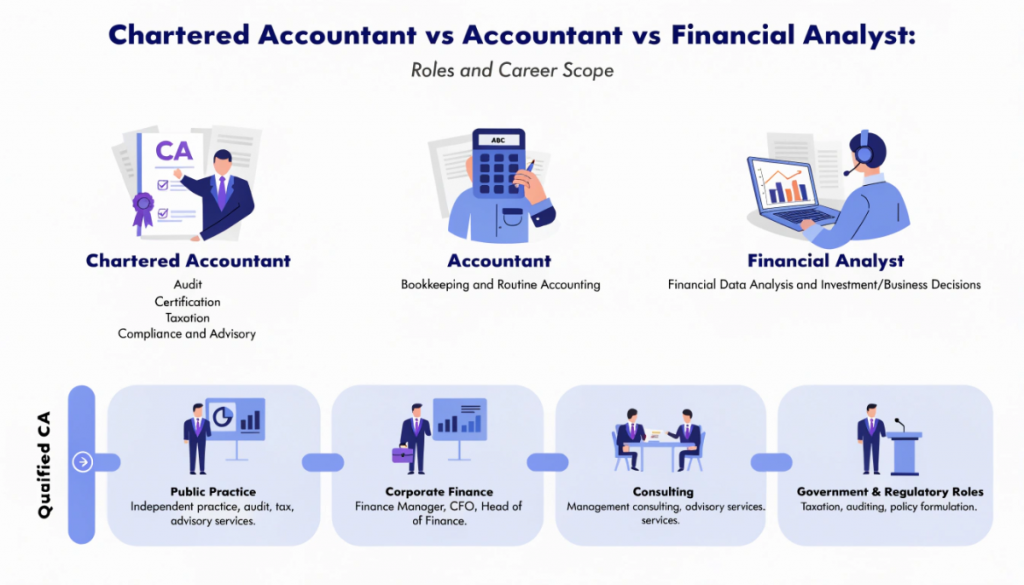
People often confuse a chartered accountant with a general accountant or a financial analyst, but the roles are quite different. A general accountant typically handles day to day bookkeeping and does not need the same level of certification. A financial analyst focuses on interpreting data for investment or business decisions rather than compliance work. What is a chartered accountant different from both of these comes down to the legal authority a CA holds, since only a qualified CA can audit and certify financial statements in most jurisdictions. Internationally, the closest equivalents are the CPA in the United States and the ACCA, which follow similar but not identical certification paths, though the core idea of a legally recognised, highly trained finance professional carries across all three.
Career Scope After Becoming a Chartered Accountant
Once qualified, CAs are not limited to one type of job. The title opens doors across industries because almost every business needs financial expertise somewhere in its operations.
- Public practice lets a CA start an independent firm offering audit, tax and advisory services to a range of clients.
- Corporate roles such as finance manager, controller or eventually chief financial officer are common paths for CAs who join companies directly.
- Consulting firms hire CAs for their ability to read financial statements quickly and spot risks that less trained eyes would miss.
- Government and regulatory bodies also need CAs for roles involving audits, tax policy and financial oversight of public institutions.
How Long the CA Journey Really Takes
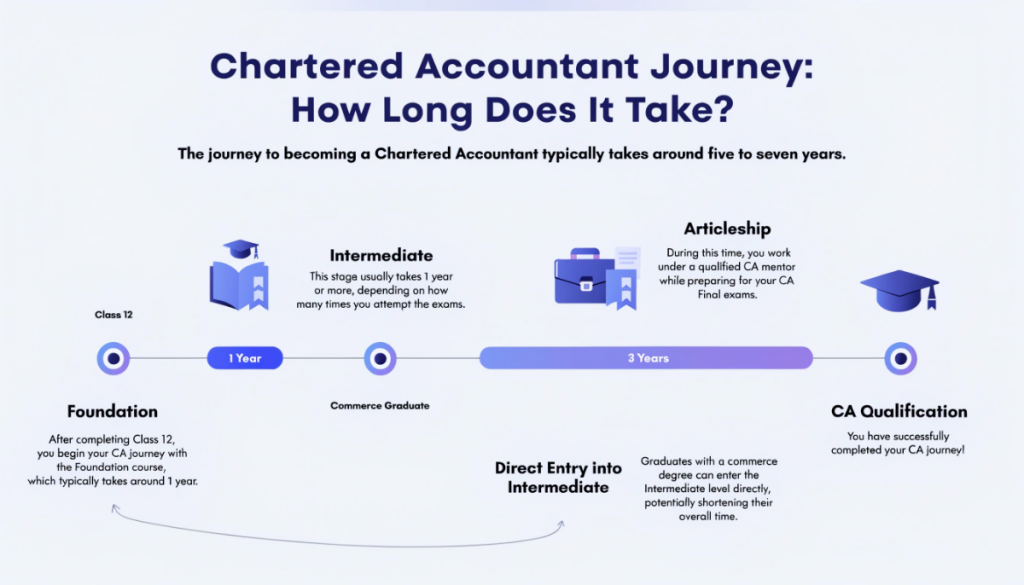
Most sources put the CA journey at five to seven years, but the actual timeline depends heavily on how quickly a candidate clears each stage.
- Students who start right after Class 12 usually spend close to a year preparing for the Foundation exam before moving on to Intermediate.
- The Intermediate stage often takes another year or more, especially since many candidates need more than one attempt to clear both groups.
- The three year articleship runs in parallel with Final exam preparation, which is why most candidates qualify around the five to seven year mark rather than sooner.
Graduates who join directly at the Intermediate level, skipping Foundation, can sometimes shave a year or so off this timeline, which is one reason the commerce degree route is popular among CA aspirants.
Why This Career Continues to Attract Students
Part of the reason chartered accountancy remains popular is the combination of respect, earning potential and job security that comes with the title. Even during economic downturns, businesses still need their books audited and their taxes filed correctly, which keeps demand for qualified CAs fairly stable. The rigorous exam process also acts as a filter, so the title itself signals a certain level of competence to employers and clients alike, which is why recruiters rarely question a CA’s basic technical grounding during interviews.
Building a Commerce Foundation Before Starting CA
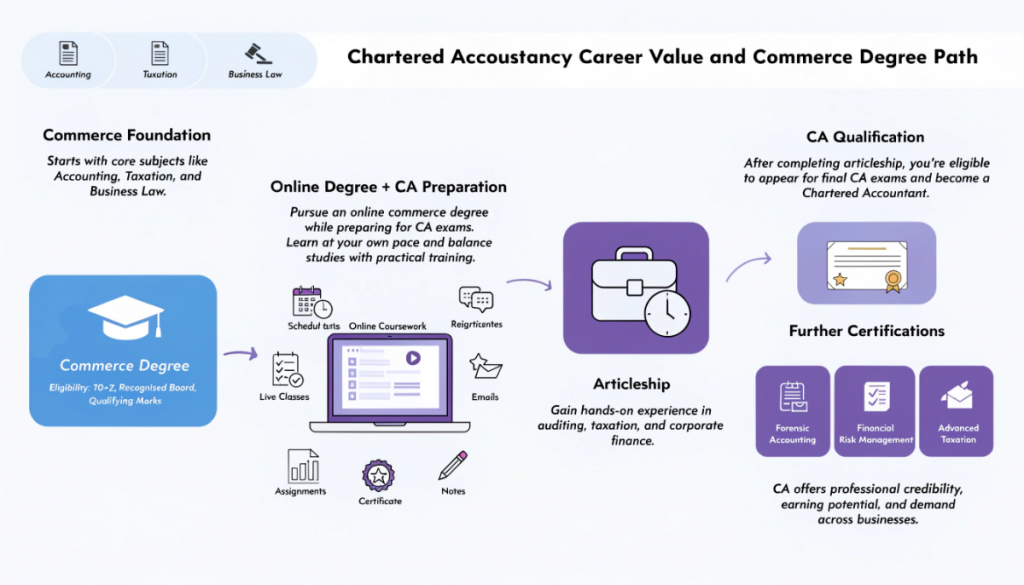
Many students choose to pair their CA preparation with a formal commerce degree rather than attempting the exams in isolation. A structured bachelor’s program in commerce builds the accounting, taxation and business law fundamentals that overlap heavily with what the CA syllabus expects, which makes the transition between the two less overwhelming.
Eligibility for an Online Commerce Degree
Most online undergraduate commerce programs that support this kind of dual preparation keep their entry requirements simple. A candidate typically needs to have completed 10+2 from a recognised board, in any stream, with around 40 percent marks in the qualifying exam. Candidates from reserved categories are often given some relaxation on this percentage. International students are usually expected to have around 60 percent marks in their qualifying examination. The flexible format of an online commerce degree makes it easier to study around CA coaching schedules rather than having to choose one over the other, since lectures and assignments can usually be completed at whatever time of day actually works.
What Comes After the Degree and CA Qualification Together
Students who complete a commerce degree alongside their CA journey often find it easier to enter articleship with a stronger theoretical base already in place. The combination also opens up additional options later, such as pursuing further certifications in areas like forensic accounting or financial risk management, since the foundational concepts carry over cleanly and do not need to be relearned from scratch.
The online format also matters here in a practical sense. Since articleship already takes up most of a candidate’s weekday hours, a flexible online commerce program allows coursework to be completed around work commitments rather than forcing a choice between classroom attendance and practical training.
Conclusion
So what is a chartered accountant, in the end. It is a finance professional trusted to audit, advise and keep a business compliant with tax and accounting rules, backed by one of the most demanding qualification processes in the commerce field. The path takes years of exams and practical training, but it leads to a career that stays in demand across industries and economic cycles. Whether you are a student weighing this path or simply curious about what the title actually involves, understanding the role makes it much easier to see why so many commerce students aim for it. With the right preparation and a clear sense of what the journey actually demands, it becomes a realistic goal rather than just an intimidating title.

Book Your
Free Session
Connect with our experts and get personalised guidance for your career, course selection, and future goals.
📖 Sources & References
✓ Verified 2026Verified sources covering the Chartered Accountancy profession in India, ICAI qualification and training, auditing, taxation, membership, professional practice, career opportunities and online commerce education.
- ICAI – Chartered Accountancy Course Official ICAI student portal covering the Chartered Accountancy course, Foundation, Intermediate, Final, examinations and student resources
- ICAI – New Scheme of Education and Training Official ICAI information on the current CA education and training scheme, including Foundation, Intermediate, Final and practical training requirements
- ICAI – Board of Studies Official ICAI academic resources, study material, syllabus, examinations and learning support for CA students
- ICAI – Practical Training Official ICAI information explaining the purpose and role of practical training in developing professional skills and applying theoretical CA knowledge
- India Code – Chartered Accountants Act, 1949 Official Government legislation regulating the Chartered Accountancy profession in India and defining professional activities including auditing, verification and certification
- ICAI – Members and Professional Practice Official ICAI member resources covering membership, Certificate of Practice, professional regulations, placements and practice-related information
- ICAI – Members in Practice Committee Official ICAI information on professional practice, CA firms, professional services, capacity building and opportunities for practising Chartered Accountants
- ICAI – Tax Audit and Taxation Practice Current ICAI information on taxation practice, tax audit guidance and the professional role of Chartered Accountants in tax compliance
- UGC Distance Education Bureau – Online and ODL Regulations Official UGC information on recognition of online programmes, student precautions and equivalence of recognised online and conventional degrees
- Shoolini Online – B.Com Honours Official Shoolini Online B.Com Honours programme information including eligibility, duration, online mode, accounting, finance and taxation areas