

Behind every well run company sits an HR team quietly making decisions about who gets hired, how people get trained and what keeps them from walking out the door. The principles of human resource management are the ground rules that guide these decisions so they stay fair, consistent and useful for the business. If you are new to HR or trying to brush up on the fundamentals, this piece breaks down what these principles actually mean, why they matter and how they show up in a real workplace, along with what it takes to build a career around them.
What the Principles of Human Resource Management Actually Cover
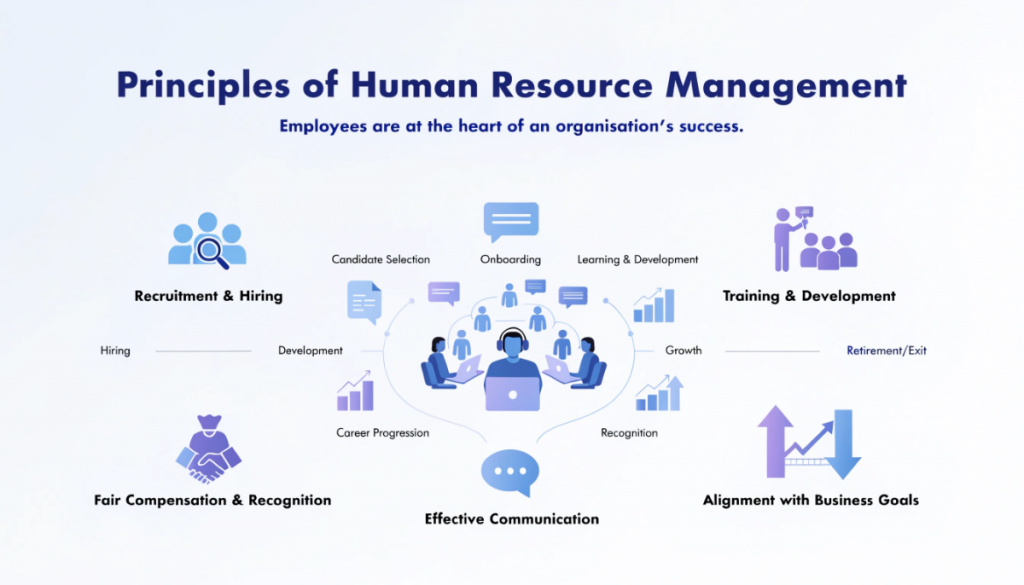
The principles of human resource management refer to the core guidelines that shape how an organisation manages its people, from hiring through to retirement or exit. These principles are not rigid laws written into a textbook and forgotten. They are practical standards that guide recruitment, training, compensation and everything else that touches an employee’s time at a company. When HR teams apply these principles consistently, the workplace tends to run smoother, disputes drop and employees generally stay longer.
At its core, human resource management is about treating people as a resource worth investing in rather than a cost to be minimised. The principles that guide this thinking cover fairness, development, communication and alignment between what the employee wants and what the business needs, and together they turn HR from a purely administrative desk job into something closer to a strategic function within the company.
Core Principles of Human Resource Management
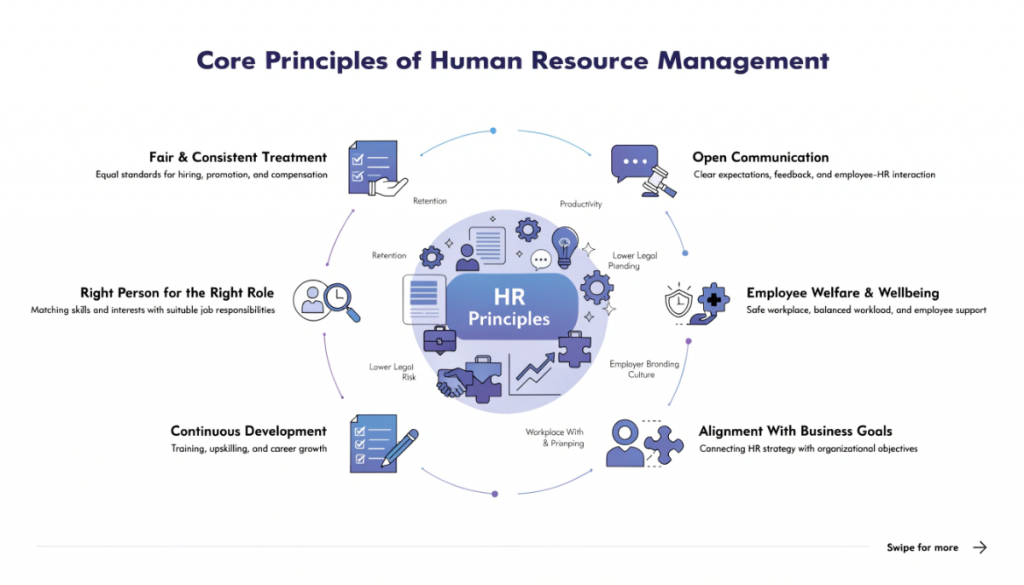
A handful of principles form the backbone of almost every HR function, regardless of the size or industry of the company.
Fair and Consistent Treatment
Every employee should be judged by the same standards when it comes to hiring, promotions and pay. This principle protects the company from bias and legal trouble while building trust among the workforce. When people see that rules apply equally, they are far less likely to feel resentful or disengaged.
Right Person for the Right Role
Placing someone in a role that matches their skills and interests is one of the oldest principles in human resource management. A mismatch between the person and the job usually shows up quickly as low performance or high turnover, so getting recruitment and placement right saves a company from costly hiring mistakes later.
Continuous Development
Skills go stale if they are not updated, and this principle pushes HR to keep training and upskilling programs running rather than treating learning as a one time onboarding task. Companies that invest in ongoing development tend to retain talent better because employees feel their growth is being taken seriously.
Open Communication
Employees perform better and stay longer when they know what is expected of them and where they stand. This principle covers everything from clear job descriptions to honest performance feedback, and it removes a lot of the guesswork that leads to frustration on both sides.
Employee Welfare and Wellbeing
Beyond salary, this principle covers safe working conditions, reasonable workloads and support for mental health. A workforce that feels cared for tends to be more productive, and ignoring welfare usually shows up later as absenteeism or high attrition.
Alignment With Business Goals
HR decisions should not exist in isolation. Every hiring plan, training budget or restructuring decision needs to connect back to what the business is actually trying to achieve. This principle keeps HR from becoming a purely administrative function and turns it into a strategic partner for the company.
Why These Principles Matter for a Business
It is tempting to treat HR as paperwork that keeps the lights on, but the principles of human resource management directly affect how well a company performs. A business that applies these principles well tends to see lower turnover, fewer internal disputes and stronger employee engagement across the board. The difference often shows up quietly, in fewer resignation letters and calmer team meetings, long before it ever appears in a formal report.
- Retention improves because employees who feel fairly treated and supported are less likely to look for opportunities elsewhere, which saves the company the cost of constant rehiring.
- Productivity rises since well matched roles and ongoing training mean employees spend less time struggling with tasks that do not suit their skills.
- Legal risk drops because consistent, documented HR practices protect the company from claims of discrimination or unfair treatment.
- Employer branding strengthens as word spreads about how a company treats its people, which makes future hiring easier and often cheaper.
- Workplace culture becomes more stable since clear expectations and fair treatment reduce the kind of friction that damages team morale over time.
Types of Principles Within Human Resource Management
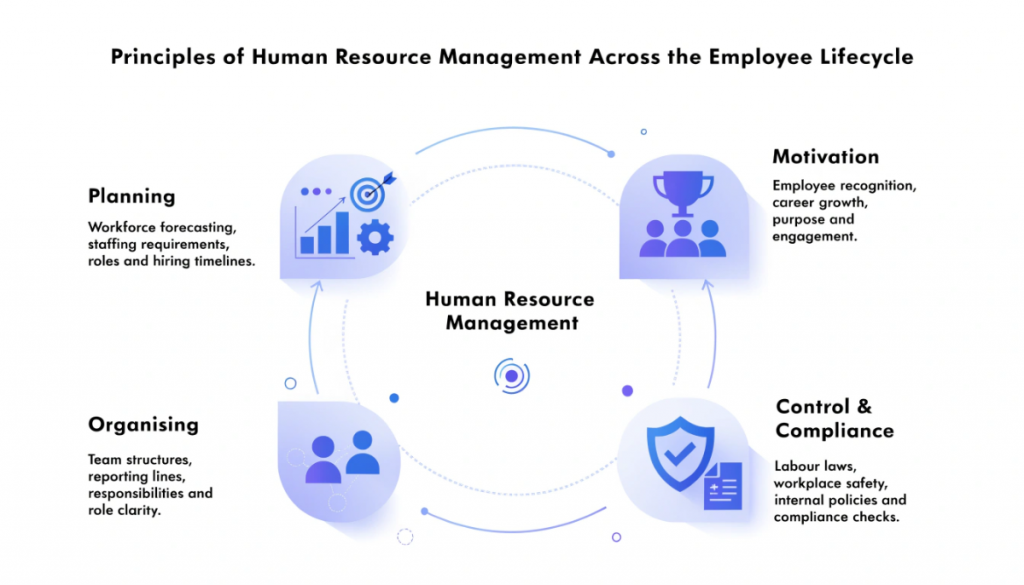
The principles of human resource management can be grouped into a few broad categories, each covering a different part of the employee lifecycle.
Principles Around Planning
Before hiring even begins, HR needs to forecast how many people are needed, in which roles and by when. This principle keeps staffing decisions tied to actual business demand rather than reactive hiring after a problem shows up.
Principles Around Organising
This covers how roles, reporting lines and responsibilities are structured across teams. Clear organisation prevents overlapping duties and confusion about who owns what, which becomes a bigger issue as a company grows.
Principles Around Motivation
Beyond pay, this principle looks at recognition, career growth and a sense of purpose at work. Motivated employees consistently outperform those who feel like they are simply going through the motions.
Principles Around Control and Compliance
This covers labour laws, workplace safety regulations and internal policies that keep the company on the right side of the law. Ignoring this principle exposes a business to legal risk that can be expensive to fix later.
How These Principles Show Up in Everyday HR Work
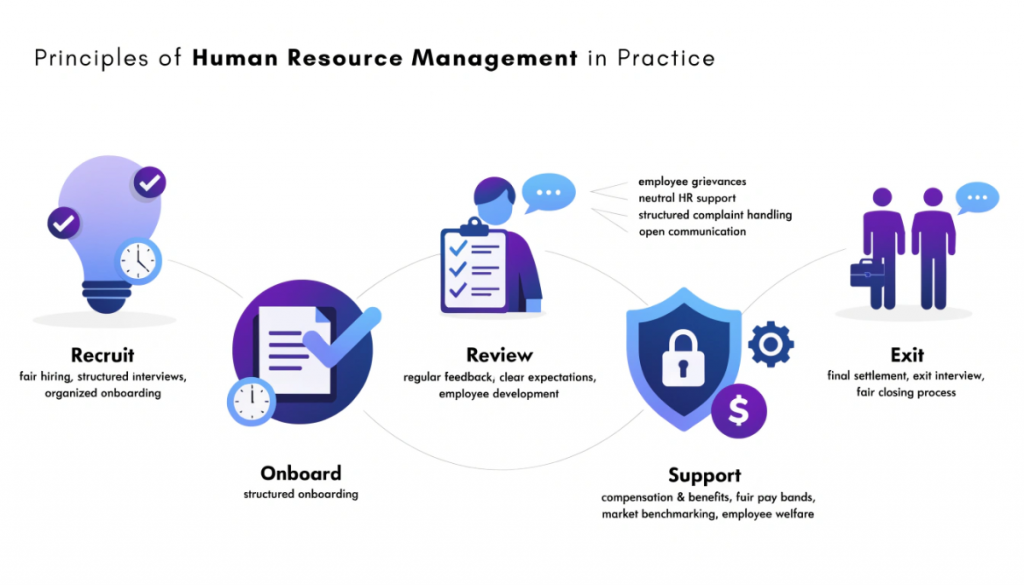
The theory behind these principles only means something once you see how it plays out in a real office. A few common HR activities show this clearly.
Recruitment and Onboarding
Right from the job posting, principles like fairness and role fit come into play. A structured interview process and a clear onboarding plan reflect an organisation that takes these principles seriously rather than hiring on a whim.
Performance Reviews
Regular, honest performance conversations put the open communication principle into practice. Employees who get specific feedback, rather than vague praise or criticism, know exactly what to improve and what they are doing right, which makes the next review far less stressful for everyone involved.
Compensation and Benefits Planning
Deciding pay bands and benefits packages ties back to fairness and welfare. Companies that benchmark salaries against the market and review them periodically are applying these principles in a very concrete way.
Handling Employee Grievances
When a dispute comes up between an employee and a manager, HR steps in as a neutral party guided by fairness and open communication. A structured grievance process, rather than an informal word in the corridor, shows an organisation is treating the principle seriously and not just paying lip service to it.
Exit and Offboarding
Even when someone leaves the company, the same principles of fairness and welfare apply. A clean exit process, a proper final settlement and an honest exit interview reflect an HR function that carries its principles through to the very last interaction with an employee.
Common Mistakes Companies Make Without These Principles
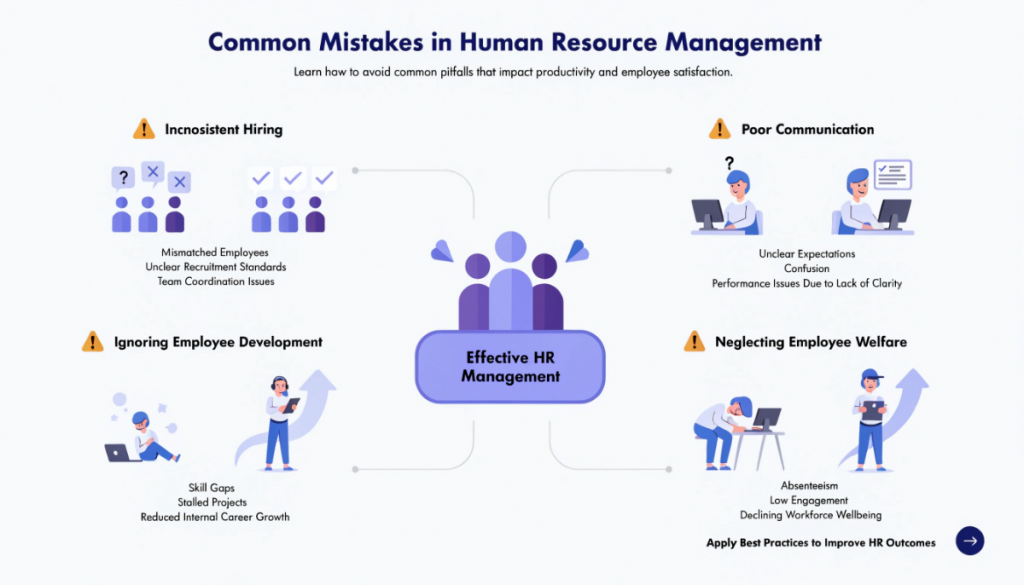
Skipping these principles tends to create the same set of problems across different organisations, and most of them are entirely avoidable with a bit of structure.
- Inconsistent hiring standards lead to a workforce that feels randomly assembled rather than deliberately built, which shows up later as coordination problems.
- Ignoring employee development leaves skill gaps that eventually slow down projects and force the company to hire externally instead of promoting from within.
- Poor communication about expectations creates confusion that managers often mistake for a performance problem, when it is really a clarity problem.
- Treating welfare as optional rather than essential tends to backfire through higher absenteeism and a workforce that disengages quietly over time.
Avoiding these mistakes is really just a matter of applying the principles of human resource management consistently instead of treating HR as a purely reactive function.
Skills That Come From Understanding These Principles
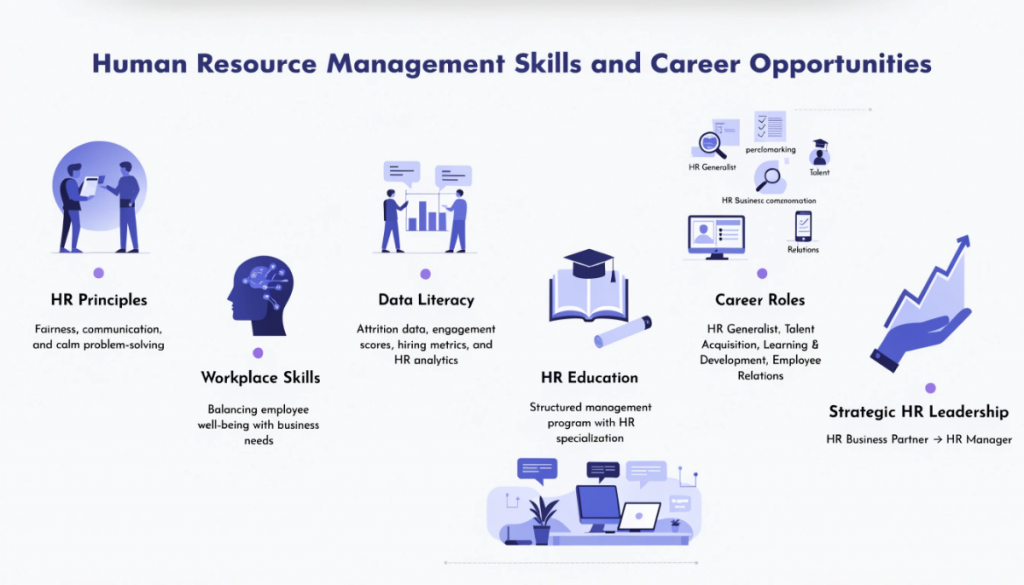
Learning the principles of human resource management builds a mix of people skills and analytical thinking that applies well beyond an HR department, and these strengths tend to carry over into almost any leadership role.
- Conflict resolution improves since fairness and communication principles train people to handle disagreements calmly rather than letting them escalate.
- Decision making under pressure gets sharper because HR often has to balance business needs against employee wellbeing in real time.
- Data literacy grows too, since modern HR increasingly relies on attrition numbers, engagement scores and hiring metrics rather than gut feeling alone.
Building a Career Around Human Resource Management
Anyone aiming for a long term career in people management benefits from a formal grounding in these principles rather than picking them up haphazardly on the job. A structured management program that includes a human resource specialisation usually covers recruitment, labour law, compensation planning and organisational behaviour in a connected way, which is harder to piece together through experience alone.
Eligibility for a Management Program With an HR Focus
Most online postgraduate management programs that offer a human resource specialisation keep their entry requirements straightforward. A candidate typically needs a bachelor’s degree from a recognised university with around 50 percent marks in the qualifying examination, with some relaxation offered to candidates from reserved categories. International applicants are usually expected to have around 60 percent marks in their qualifying examination. Because the subject builds on general business concepts, graduates from commerce, arts, science or engineering backgrounds can all take up a program built around human resource management, regardless of what they studied at the undergraduate level.
Where This Knowledge Can Take You
Graduates who build a solid base in these principles often move into roles such as HR generalist, talent acquisition specialist, learning and development coordinator or employee relations manager. With experience, many progress into HR business partner or HR manager roles, where the same principles apply at a larger, more strategic scale rather than at the level of individual hires.
The subject also pairs well with skills that modern HR teams rely on, such as reading attrition data, using HR software for tracking performance and putting together compensation benchmarks. Someone who understands both the principles and the tools tends to move up faster, since employers increasingly expect HR professionals to back their decisions with data rather than instinct alone.
Conclusion
The principles of human resource management are not abstract ideas locked away in a textbook. They shape how a company hires, trains, pays and supports the people who actually run the business day to day. From fair treatment to open communication and continuous development, these principles show up in almost every decision an HR team makes. Whether you are studying the subject or managing a team yourself, keeping these principles in mind makes it a lot easier to build a workplace people actually want to stay in. Once these ideas become second nature, HR stops feeling like paperwork and starts working as a genuine driver of how well a company performs.

Book Your
Free Session
Connect with our experts and get personalised guidance for your career, course selection, and future goals.
📖 Sources & References
✓ Verified 2026Verified sources covering human resource management, recruitment, workforce planning, employee development, communication, performance management, employee wellbeing, reward, workplace relations and labour compliance.
- CIPD – Strategic Human Resource Management Explains how people management and development practices connect with business strategy, organisational goals and long-term performance
- CIPD – Recruitment Covers recruitment and resourcing, defining roles, attracting applicants, selection and making appointments based on organisational needs
- CIPD – Workforce Planning Explains workforce planning, matching people and skills to organisational demand, future workforce needs and business objectives
- CIPD – Learning and Development Covers workplace learning, training and development methods used to build employee skills, capability and performance
- CIPD – Performance Management Explains performance objectives, feedback, appraisals, learning and development and alignment between employee and organisational goals
- CIPD – Employee Communication Provides guidance on effective internal communication, dialogue, manager responsibilities and communication strategies in the workplace
- CIPD – Health and Wellbeing at Work Explains the relationship between employee health, wellbeing, engagement and organisational performance
- CIPD – Employee Relations Covers employer-employee relationships, employee voice, workplace conflict, communication and approaches to managing employment relations
- CIPD – Reward and Compensation Covers pay, benefits, reward strategies, employee recognition, retention and the relationship between reward and organisational objectives
- Ministry of Labour and Employment – Labour Codes Official Government of India information on labour codes covering wages, industrial relations, social security and occupational safety and working conditions
- India Code – Occupational Safety, Health and Working Conditions Code, 2020 Official legislation covering occupational safety, health and working conditions of people employed in establishments
- Shoolini Online – MBA in Human Resource Management Official Shoolini Online information on the MBA in HR Management, learning format, career opportunities and programme details