

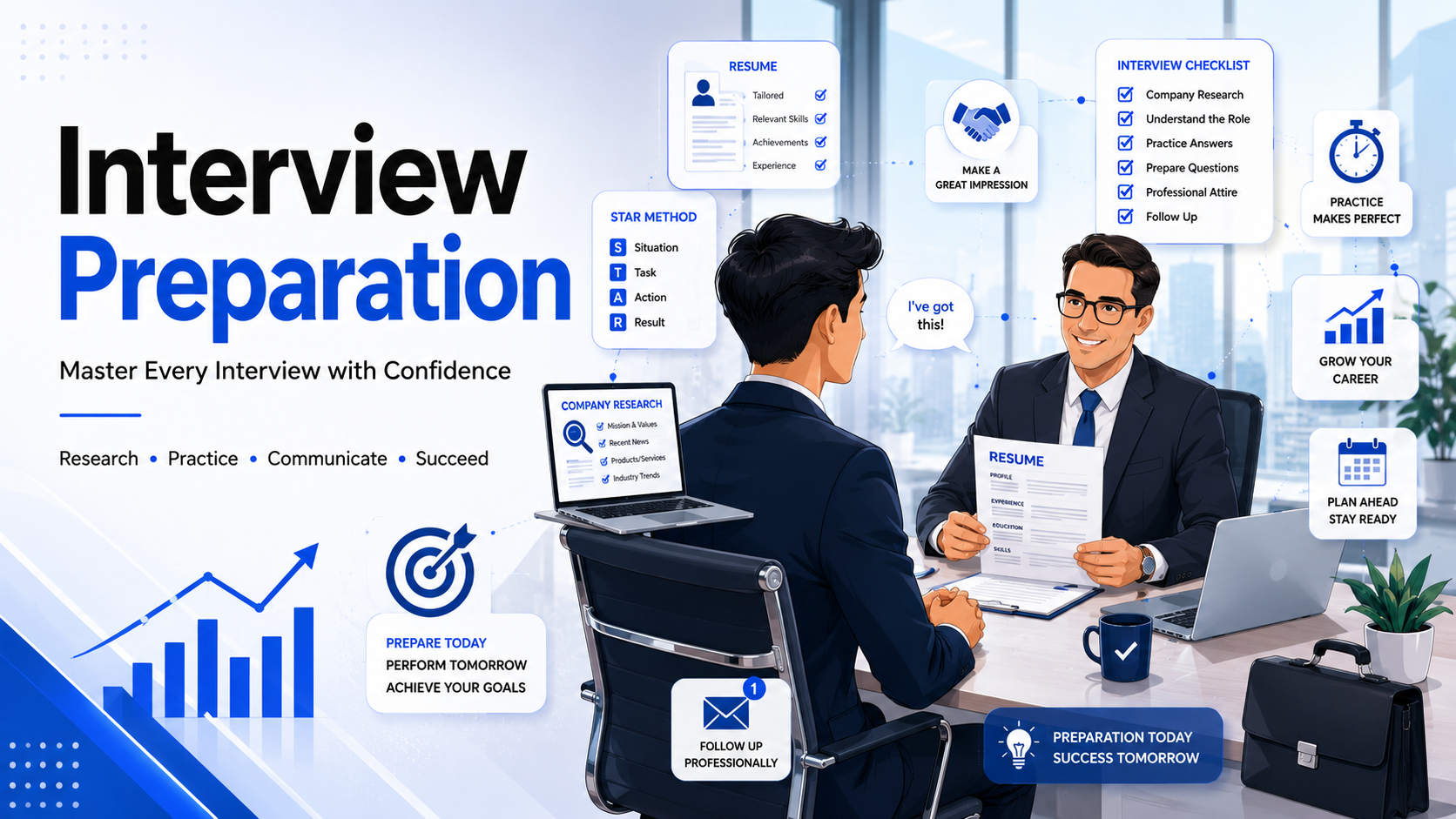
Interview preparation is the single biggest factor separating candidates who get offers from those who get rejected even when both have similar qualifications on paper.
Most people prepare for interviews by reading generic tips the night before which almost never works because effective interview preparation requires understanding the specific role, researching the company properly and practising your answers out loud rather than just thinking through them in your head.
This guide covers exactly how to prepare for an interview step by step including research, answering frameworks, handling difficult questions, technical and behavioural rounds and what to do in the final days before the interview. Whether you are preparing for your first job interview or a senior leadership role the same fundamentals apply and getting them right consistently improves your odds of converting an interview into an offer.
Why Most People Get Interview Preparation Wrong
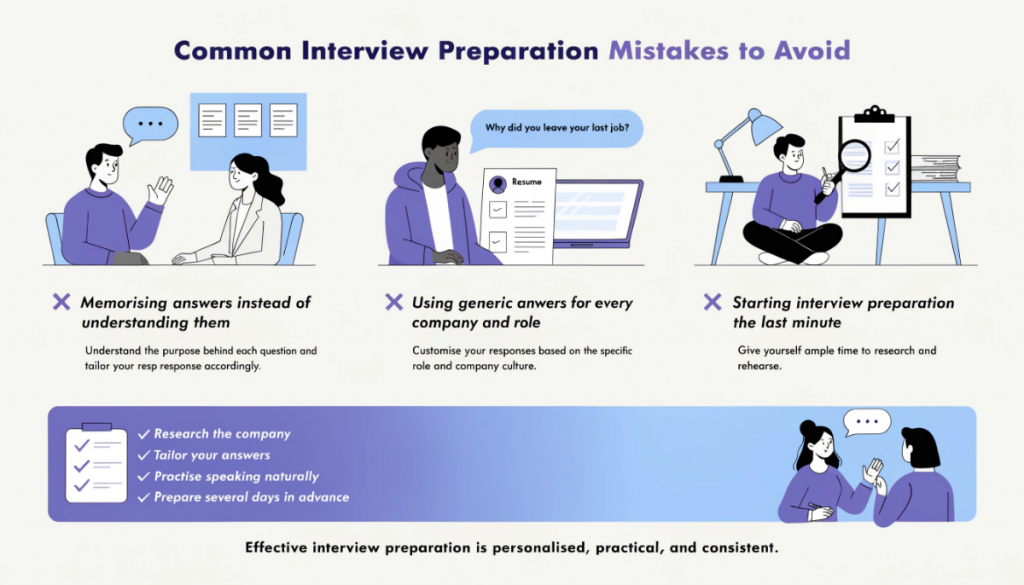
The most common mistake in interview preparation is treating it as a memorisation exercise. Candidates write out answers to commonly asked questions, memorise them word for word and then deliver them robotically in the actual interview. Interviewers can tell immediately when an answer is memorised rather than genuinely thought through and it works against the candidate rather than for them.
The second most common mistake is generic preparation that is not tailored to the specific role or company. Reading a list of the top fifty interview questions and preparing generic answers to all of them produces a candidate who sounds competent but interchangeable. Strong interview preparation is specific. It connects your actual experience to the specific requirements of the role you are interviewing for and it demonstrates that you understand what the company does and why you specifically are a good fit for this position rather than any position.
The third mistake is starting interview preparation too late. Cramming the night before an interview produces anxious, under-rehearsed answers. Effective interview preparation starts as soon as you know you have an interview scheduled and ideally gives you several days to research, draft answers, practise them out loud and refine them based on how they actually sound when spoken rather than just how they read on paper.
Research You Need to Do Before Anything Else
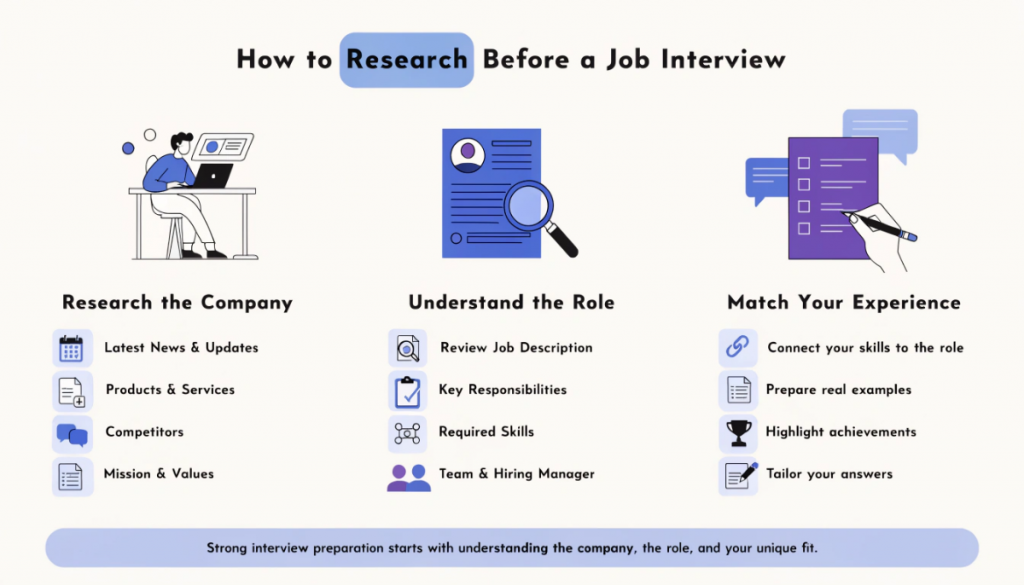
Real interview preparation starts with research and most candidates under-invest here. Here is what genuinely matters.
Understand the Company Beyond the About Page
Read the company’s most recent press releases, funding announcements or quarterly results to understand what is currently happening in the business
Check recent news coverage to understand how the company is perceived externally and what challenges it might be facing
Look at the company’s products or services directly if possible. Use the product, read customer reviews and understand the actual value proposition
Identify who the company’s main competitors are and have a basic point of view on how the company differentiates itself
Review the company’s mission, values and recent strategic announcements to understand what they prioritise as an organisation
Understand the Role Itself in Detail
Read the job description multiple times and identify the three to five core responsibilities that appear most emphasised
Identify the specific skills and experience the posting repeatedly mentions because these are what the interviewer will most likely probe
Search for the actual team or department on LinkedIn to understand reporting structure and team composition if this information is accessible
If you know who will be interviewing you, look up their professional background to understand their perspective and likely areas of interest
Map Your Experience to the Role
This is the step most candidates skip and it is the most important part of interview preparation. Take the core responsibilities and required skills identified from the job description and for each one identify a specific example from your own experience that demonstrates that capability. This mapping exercise is what allows you to answer questions specifically and convincingly rather than generically because you have already done the work of connecting your background to what the role actually needs.
Building Strong Answers Using a Repeatable Framework
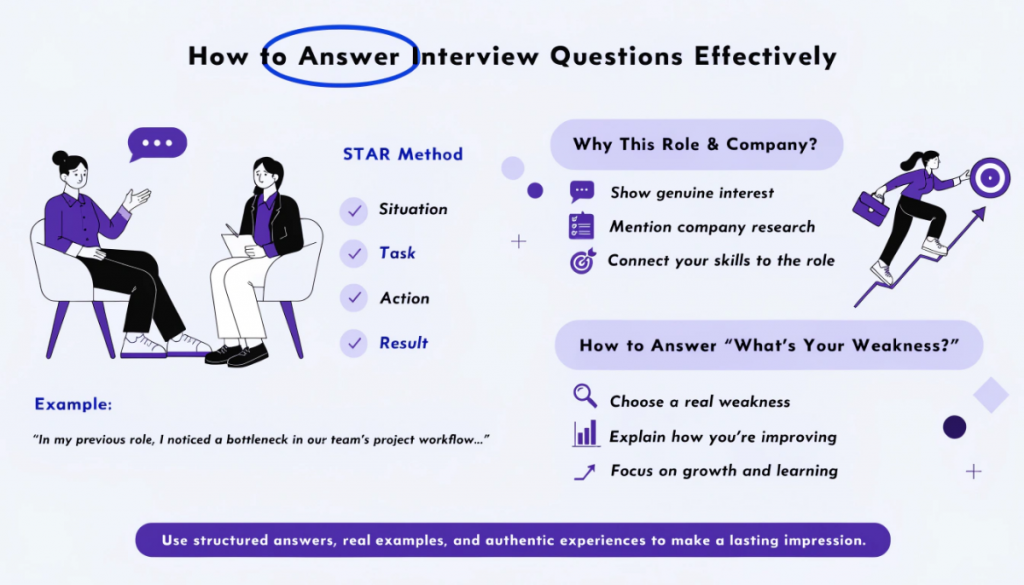
Good interview preparation does not mean memorising scripts. It means having a structure you can apply flexibly to any question so your answers are clear and complete without sounding rehearsed.
The STAR Method for Behavioural Questions
The STAR method is the most widely used framework for behavioural interview questions and it remains effective because it forces a complete and structured answer:
Situation: Briefly set the context. What was happening and why did this situation matter
Task: What were you specifically responsible for in that situation
Action: What did you actually do. This should be the longest part of your answer and should focus on your individual contribution not just what the team did
Result: What was the outcome. Quantify it wherever possible and include what you learned if the result was not entirely positive
Prepare five to seven STAR stories from your experience that cover different themes including leadership, conflict resolution, failure and recovery, working under pressure, going beyond your role and a genuine achievement you are proud of. Most behavioural questions can be answered using a variation of these prepared stories which means you are not building new answers from scratch under pressure during the actual interview.
Answering Why This Role and Why This Company
This is one of the most predictable questions in any interview and yet candidates routinely give generic answers that sound interchangeable with any other applicant.
A strong answer connects three things specifically: what genuinely interests you about the work itself based on the research you did, what you have observed about the company that aligns with your values or career direction and what specific strength you bring that maps directly to what the role needs. Avoid answers that are entirely about what you will get from the company such as learning opportunities or career growth. Balance that with what you bring to them.
Preparing for the Weakness Question
In interview preparation the classic weakness question trips up more candidates than almost any other because most people either give a fake weakness disguised as a strength or genuinely undersell themselves.
The strongest approach in interview preparation for this question is to identify a real but not role-critical weakness, briefly explain how you recognised it and then focus most of your answer on the specific concrete steps you have taken to address it. The goal is not to pretend you have no weaknesses but to demonstrate self-awareness and a track record of genuine improvement.
Preparing for Technical and Role-Specific Rounds
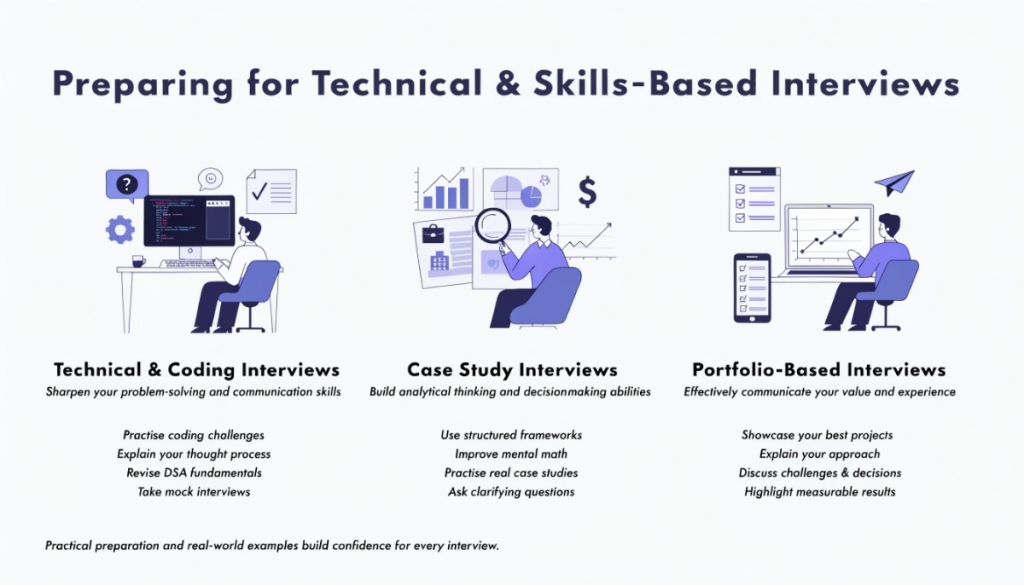
For roles that include technical assessments, case studies or skills tests, your interview preparation needs to go beyond communication and include genuine practice of the actual skills being tested.
For Technical and Coding Interviews
Practise problems on platforms like LeetCode or HackerRank that match the difficulty level and style of questions typically asked at the specific company you are interviewing with
Practise explaining your thought process out loud while solving problems since most technical interviews evaluate how you think not just whether you reach the correct answer
Review the fundamentals of data structures and algorithms specifically relevant to the role rather than trying to cover everything superficially
Do at least two to three mock technical interviews with a friend or mentor before the real interview to get comfortable with the format and time pressure
For Case Study and Consulting Interviews
Practise structuring problems using frameworks like profitability analysis, market entry or operations improvement depending on the type of case typically asked
Practise doing mental math quickly and accurately since most case interviews include quantitative components under time pressure
Work through at least ten to fifteen practice cases with a partner who can give you feedback on structure and communication, not just the final answer
Learn to ask clarifying questions at the start of a case rather than diving immediately into analysis since this demonstrates structured thinking
For Roles Requiring a Portfolio or Work Samples
If you are interviewing for a design, writing, marketing or product role where a portfolio is expected, prepare to walk through two or three of your strongest projects in detail. For each one be ready to explain the original problem or brief, the specific decisions you made and why, any constraints you worked within and the actual outcome or impact. Interviewers in these fields are usually less interested in a polished narration and more interested in understanding how you think through problems and make trade-offs.
Practical Logistics That Affect Interview Performance
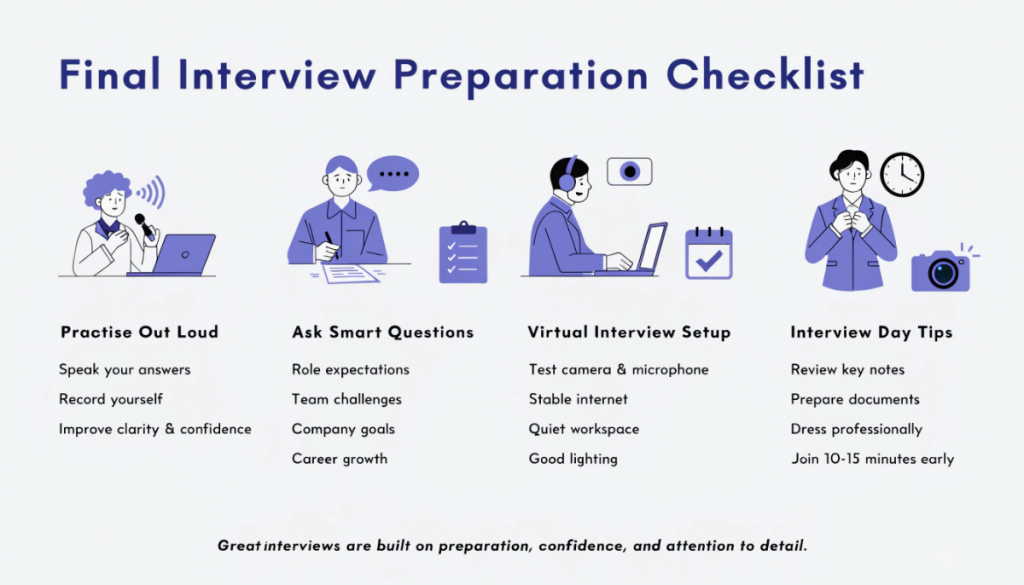
Interview preparation is not only about content. Logistics and presentation affect how your answers land regardless of how well prepared the content itself is.
Practising Out Loud Matters More Than Most People Think
There is a significant difference between an answer that sounds good in your head and one that sounds good when actually spoken. Practise your key answers out loud, ideally to another person who can give feedback, or at minimum recorded on your phone so you can listen back. This single step in interview preparation catches awkward phrasing, excessive length and unclear structure that silent mental rehearsal never reveals.
Preparing Questions to Ask the Interviewer
Every interview ends with the question ‘do you have any questions for us’ and having nothing prepared signals a lack of genuine interest. Strong interview preparation includes three to five thoughtful questions covering different areas such as what success looks like in this role in the first six months, what the biggest challenges facing the team currently are, how the team’s work connects to the company’s broader strategy and what the interviewer personally enjoys about working there.
Avoid questions you could have answered yourself through basic research since asking them signals you skipped that part of your preparation.
Managing Virtual Interview Logistics
Test your camera, microphone and internet connection at least an hour before a video interview, not five minutes before
Choose a quiet, well-lit location with a neutral background and let people in your home or office know not to interrupt
Keep your notes and research nearby but visible only to you, and resist the urge to read from them word for word
Look at the camera periodically rather than only at the screen to simulate eye contact, which matters more in video interviews than people expect
What to Do the Day Before and the Morning Of
The final stage of interview preparation should be light, not intensive. Avoid cramming new material the night before since it tends to increase anxiety rather than improve performance. Instead review your prepared STAR stories briefly, confirm logistics including the location or video link, prepare your outfit and documents in advance and get a proper night of sleep. On the morning of the interview do a final light review of your research notes and arrive or log in ten to fifteen minutes early rather than rushing in at the last moment.
Common Interview Preparation Mistakes to Avoid
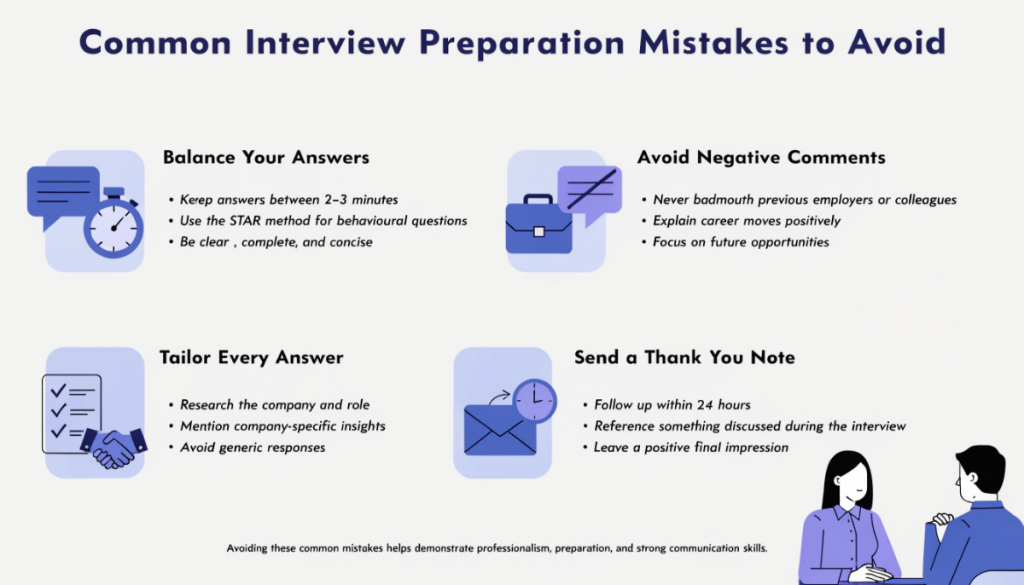
Even candidates who prepare seriously make specific avoidable mistakes that undermine otherwise solid preparation.
Talking Too Much or Too Little
In interview preparation, answers that run more than two to three minutes typically lose the interviewer’s attention and signal poor communication skills regardless of how good the content is. Answers that are too short, especially for behavioural questions, fail to demonstrate the depth interviewers are looking for. Practising your STAR stories with a timer during interview preparation helps calibrate length so your answers are complete but not excessive.
Badmouthing Previous Employers or Colleagues
In every interview, even when a previous job or manager was genuinely difficult, speaking negatively about them in an interview raises concerns about how you will speak about this company if things do not work out. Strong interview preparation includes a neutral, professional way to discuss why you left a previous role that focuses on what you are moving toward rather than what you are running from.
Not Tailoring Answers to the Specific Company
Generic answers that could apply to any company in any industry are the clearest signal of weak interview preparation. Every answer where it is relevant should reference something specific about this company, this role or this team rather than staying entirely abstract. This is why the research phase of interview preparation is not optional even when you are confident in your communication skills generally.
Failing to Follow Up
Many candidates treat the interview itself as the end of the process and skip the follow-up entirely. A brief, genuine thank you note sent within twenty four hours referencing something specific from the conversation is a small but real part of effective interview preparation that some candidates skip entirely, leaving an easy opportunity to stand out unused.
Conclusion
Genuine interview preparation combines genuine research into the company and role, structured but flexible answers built using frameworks like STAR, real practice of any technical or case components specific to the role and attention to the practical logistics that affect how your preparation comes across on the day. The candidates who consistently convert interviews into offers are not necessarily the most qualified on paper. They are the ones who did the work of connecting their specific experience to what the role and company actually need and who practised enough that their answers come across as genuine rather than rehearsed. Starting your interview preparation early, practising out loud and tailoring every answer to the specific opportunity in front of you are the three habits that make the biggest difference.
The next-gen Career Services platform for campus learners.
Shape Your Future With Confidence
Discover the right career path through expert counselling, psychometric assessments, admission guidance, and study abroad support.